What is China Fasteners and How Do They Impact Global Trade?
In recent years, China Fasteners have emerged as a critical component in global trade. This industry is not just about producing metal parts; it plays a vital role in various sectors worldwide. As noted by John Li, an expert in the fasteners market, "China Fasteners are essential for modern manufacturing." His insights highlight the influence of this sector on supply chains and production efficiency.
China Fasteners impact numerous industries, from automotive to construction. They help manufacturers ensure quality and reliability. However, the reliance on China also raises concerns. For instance, fluctuations in quality or pricing can disrupt supply chains. Moreover, companies need to navigate the complexities of international trade policies that can affect sourcing.
Importantly, not all fasteners meet global standards. This inconsistency can lead to problems that firms can't afford. Therefore, assessing suppliers in China is crucial. Companies must be aware of these challenges while reaping the benefits of affordable pricing. As the global market evolves, the role of China Fasteners will continue to shape the way businesses operate worldwide.

China Fasteners: An Overview of Their Definition and Types
China's fasteners are crucial components in various industries. They are typically defined as products used to join or secure two or more objects together. Common types include bolts, screws, nuts, and washers. According to industry reports, China's fastener market accounted for over 30% of the world's total production in recent years. This significant share highlights their role in manufacturing and construction globally.
The fastener industry in China has seen rapid growth. In 2022, the total output value exceeded $25 billion. However, the market faces challenges like fluctuating raw material costs and stringent international trade regulations. For instance, the demand for quality and compliance has surged, pushing manufacturers to rethink their sourcing strategies. Some companies still struggle with quality control, leading to subpar products.
Moreover, Chinese fasteners impact global trade dynamics. The availability of affordable fasteners has benefited various sectors, from automotive to electronics. Yet, it has raised concerns about dependency on a single source. This reliance prompts businesses to explore diversification to mitigate risks. As the global landscape evolves, understanding fasteners' role will remain essential for stakeholders.
What is China Fasteners and How Do They Impact Global Trade?
| Type of Fastener |
Material |
Global Market Share (%) |
Top Export Destinations |
Estimated Annual Growth Rate (%) |
| Bolts |
Steel |
20% |
USA, Germany, Japan |
5% |
| Nuts |
Stainless Steel |
15% |
Canada, Australia, UK |
6% |
| Screws |
Carbon Steel |
30% |
France, Brazil, India |
4% |
| Washers |
Brass |
10% |
Mexico, South Korea, Italy |
3% |
| Anchors |
Aluminum |
5% |
Netherlands, Russia, UAE |
7% |
The Role of China in the Global Fasteners Market
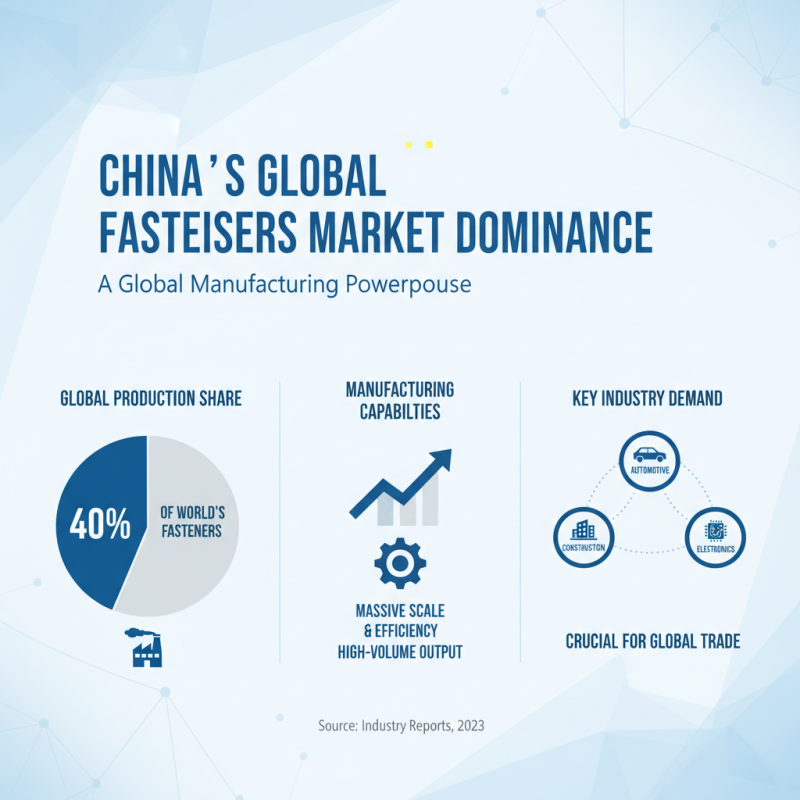
China's role in the global fasteners market cannot be overstated. In recent years, the country has emerged as a dominant player, producing nearly 40% of the world's fasteners. This statistic highlights the sheer scale of China's manufacturing capabilities. The demand for fasteners spans various industries, including automotive, construction, and electronics, which further underscores their significance in global trade.
However, challenges persist. While China's production is vast, quality control remains a concern. Reports indicate that nearly 15% of exported fasteners face quality issues. This raises questions about reliability and safety. Furthermore, geopolitical tensions can impact manufacturing and logistics, disrupting supply chains. As companies rely heavily on Chinese fasteners, they may face delays or increased costs due to tariffs.
Moreover, sustainability is becoming a critical issue. The fasteners industry contributes to significant carbon emissions. As global regulations tighten, manufacturers must adapt to maintain their market position. China, as a major supplier, holds a pivotal role in addressing these challenges and improving practices. Balancing production efficiency with ethical considerations presents ongoing dilemmas for the industry.
Impact of Chinese Fasteners on International Trade Dynamics
Chinese fasteners play a crucial role in global trade dynamics. With their affordability and mass production capabilities, they have become a staple in various industries. Industries worldwide rely on these fasteners for manufacturing and assembly. The sheer volume exported affects pricing strategies and supply chains globally.
However, reliance on Chinese fasteners can lead to vulnerabilities. Dependency on a single source raises concerns about supply disruptions. Trade tensions and tariffs can impact costs. These factors encourage companies to seek alternatives or diversify their supply chains. It's essential for businesses to reflect on the risks associated with over-dependence.
Additionally, quality control may vary among manufacturers. Not all fasteners meet international standards. This inconsistency can result in production issues and safety concerns. Firms must prioritize due diligence when sourcing. Balancing cost and quality requires careful consideration in a dynamically changing trade environment.
Challenges and Opportunities in the China Fasteners Industry
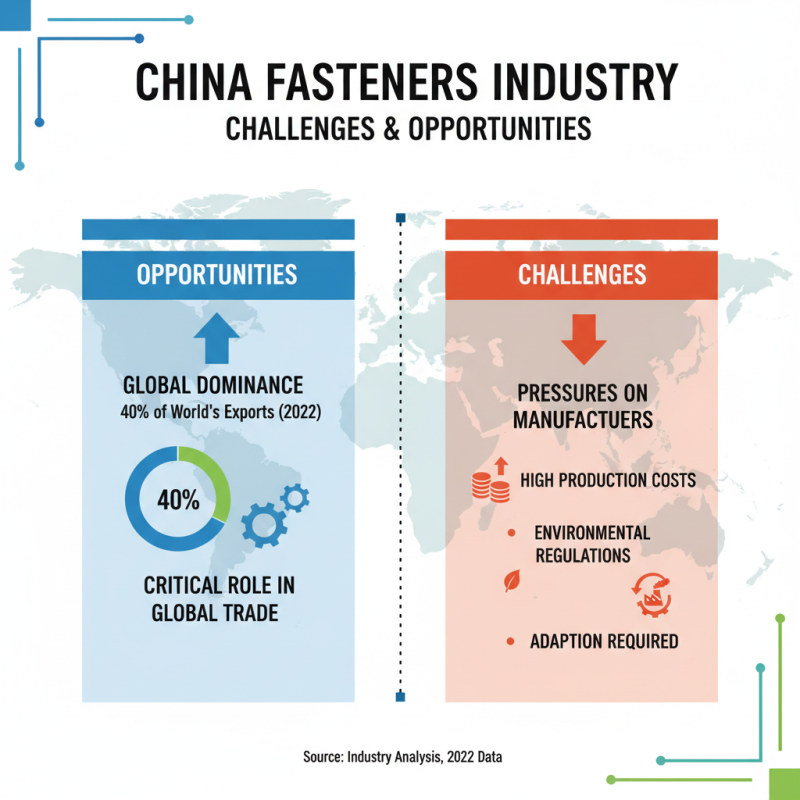
The China fasteners industry plays a critical role in global trade. In 2022, it accounted for nearly 40% of the world’s fastener exports. This dominance offers significant opportunities. However, challenges persist. High production costs and environmental regulations are placing pressure on manufacturers. Companies must adapt to avoid losing market share.
Pricing volatility is a major concern. Raw material costs have fluctuated over recent years. For instance, steel prices rose by 20% in 2023. This impacts the pricing strategy of companies and their profit margins. A shift to eco-friendly materials could mitigate costs over time, but it requires investment.
Labor shortages and supply chain disruptions also pose threats. Many manufacturers face difficulties in sourcing skilled workers. This challenges productivity and quality. Additionally, global shipping delays affect delivery timelines. Businesses need to implement flexible strategies to navigate these hurdles while seizing emerging market trends.
Future Trends in China Fasteners and Global Trade Relations
China's fasteners industry plays a crucial role in global trade. As a major supplier, it affects various sectors, from construction to automotive manufacturing. However, ongoing trade tensions and tariffs have created uncertainties for businesses relying on these components. Companies are often caught in a web of changing regulations, making it hard to plan for the future.
Looking ahead, we see both challenges and opportunities. The demand for high-quality fasteners is growing. Yet, there's a need for innovation in production techniques. Chinese manufacturers must adapt to stricter quality standards. This shift could lead to a more competitive market internationally. Both buyers and sellers must navigate these changes carefully.
Environmental concerns are another significant factor. Sustainability practices are rising in importance. Fastener producers must consider eco-friendly options in materials and processes. This adjustment may increase costs initially but may drive long-term gains. Traditions in fastener production may need reevaluation. The focus should shift towards sustainable practices to ensure the industry's longevity.
Impact of China Fasteners on Global Trade (2023)
As illustrated in the bar chart, the United States leads in fastener imports from China, followed by Germany and Japan. This data showcases the significant role China plays in the global fastener market, influencing trade relations and supply chains across various industries.


 Phone
Phone Send Email
 whatsapp
 Facebook
 Youtube