What is a Rivet and How is it Used in Manufacturing?
Rivets play a crucial role in manufacturing, often unnoticed yet vital. These small, cylindrical fasteners create strong joints in various applications. Used extensively in construction and automotive industries, rivets offer durability and reliability.
In modern manufacturing, rivets are applied in structures ranging from airplanes to bridges. The riveting process requires precision to ensure optimal strength. While many may consider riveting outdated, it remains relevant due to its unique benefits.
Understanding rivets involves recognizing their various types and uses. Certain applications may require specific rivet designs. This complexity can lead to mistakes if not carefully considered. The failure to choose the right rivet type can compromise structural integrity. Hence, knowledge about rivets is essential for effective manufacturing.
What is a Rivet? Definition and Components
Rivets are essential fasteners in manufacturing. They provide a strong, permanent bond between components. A rivet typically consists of a cylindrical shaft and a head. The shaft is inserted through pre-drilled holes in materials, often metals. When the tail is deformed, it creates a secure joint.
According to a report by Grand View Research, the global rivet market is expected to reach USD 3.65 billion by 2025. This growth is driven by the expanding automotive and aerospace industries. Rivets are celebrated for their structural integrity. They are particularly useful in situations where welding is impractical. However, reliance on riveted joints can sometimes lead to potential weaknesses. Improper installation may compromise structural strength.
The main types of rivets include solid, blind, and pop rivets. Solid rivets are known for their high strength. Blind rivets can be installed in hard-to-reach areas. Pop rivets are popular for their ease of use. Each type has specific applications, which can vary widely. Manufacturers must choose wisely to ensure optimal performance. Misapplication of rivets can lead to failures, posing safety risks. Understanding the components and characteristics of each rivet type is crucial for effective manufacturing processes.
Usage of Different Types of Rivets in Manufacturing
History of Rivets in Manufacturing
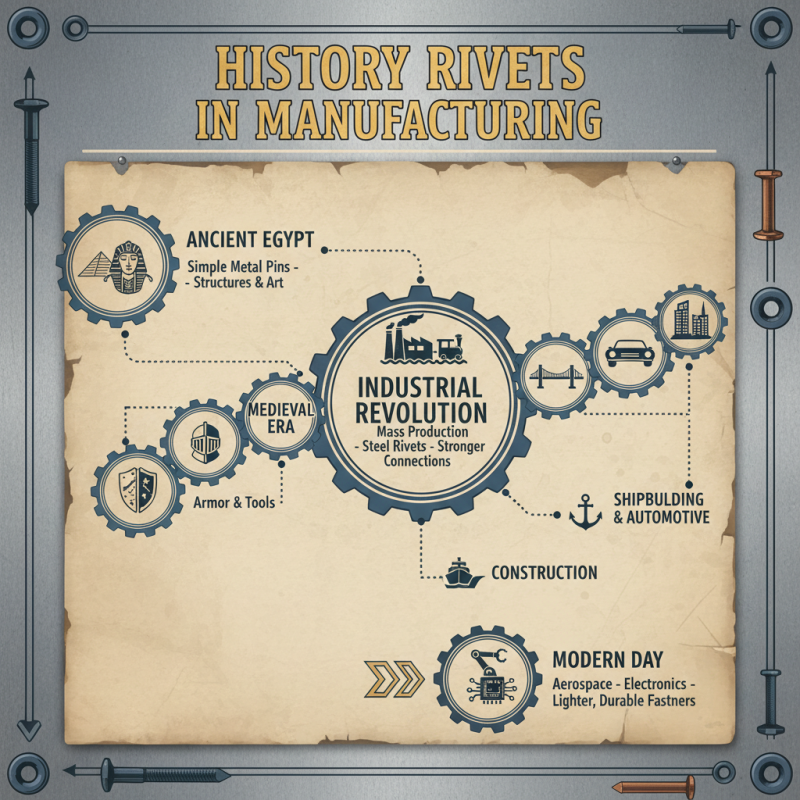
The history of rivets dates back thousands of years. Originally, they were simple metal pins that held materials together. Ancient Egyptians used them in their structures. These early rivets displayed a remarkable understanding of metallurgy and engineering. Over time, their design evolved. The Industrial Revolution saw a surge in rivet production. Factories became centers for mass production. Steel rivets allowed for stronger and more durable connections. This advancement transformed industries such as construction, shipbuilding, and automotive manufacturing.
Rivets played a crucial role in iconic structures. For instance, the Eiffel Tower stands tall, thanks in part to thousands of rivets. However, not every use of rivets has been flawless. Certain designs suffered from stress-related failures. Riveting techniques sometimes produced weaknesses in crucial areas. These flaws led to injuries and costly repairs. As industries modernized, new fastening methods emerged. Yet, rivets remain relevant, offering reliability in various applications. The balance between tradition and innovation continues to shape the future of rivets in manufacturing.
Types of Rivets and Their Applications
Rivets are essential fasteners widely used in manufacturing. They provide strong, permanent connections in various materials. Understanding the types of rivets is crucial for effective application in different projects.
Solid rivets are the most traditional type. These are mainly used in aircraft and heavy machinery. The installation requires a special tool, making it labor-intensive. However, their strength is unmatched in critical applications.
Blind rivets, or pop rivets, are popular for their ease of use. They can be installed without access to the back of the material. This makes them ideal for thin sheets and tight spaces. In contrast, tubular rivets offer a lightweight option, often used in furniture and light fixtures. Each type has distinct advantages and considerations, emphasizing the importance of choosing the right rivet for each task.
The Riveting Process: Steps and Techniques
The riveting process is essential in many manufacturing sectors. It involves joining materials, usually metals, through the use of rivets. The technique starts with preparing the materials. Proper alignment is crucial for successful riveting. Once aligned, the rivet is inserted into pre-drilled holes.
The next step is to apply heat or pressure. This process varies depending on the type of rivet used. Hot rivets are often hammered down, while cold rivets require a hydraulic press. The rivets expand and create a strong bond. However, this stage can be critical. If not executed well, the joint may weaken.
After riveting, the joints are inspected. This ensures they meet quality standards. Inexperienced workers might overlook flaws. It's important to evaluate the integrity of the connection. Each step in the riveting process requires precision and skill. Mistakes can lead to structural failures, affecting overall safety and reliability in manufactured products.
What is a Rivet and How is it Used in Manufacturing?
| Rivet Type |
Material |
Diameter (mm) |
Length (mm) |
Application |
| Solid Rivet |
Steel |
4 |
20 |
Aircraft manufacturing |
| Blind Rivet |
Aluminum |
5 |
30 |
Construction |
| Semi-tubular Rivet |
Brass |
3 |
15 |
Jewelry making |
| Pop Rivet |
Stainless Steel |
6 |
25 |
Automotive |
Advantages of Using Rivets Over Other Fastening Methods
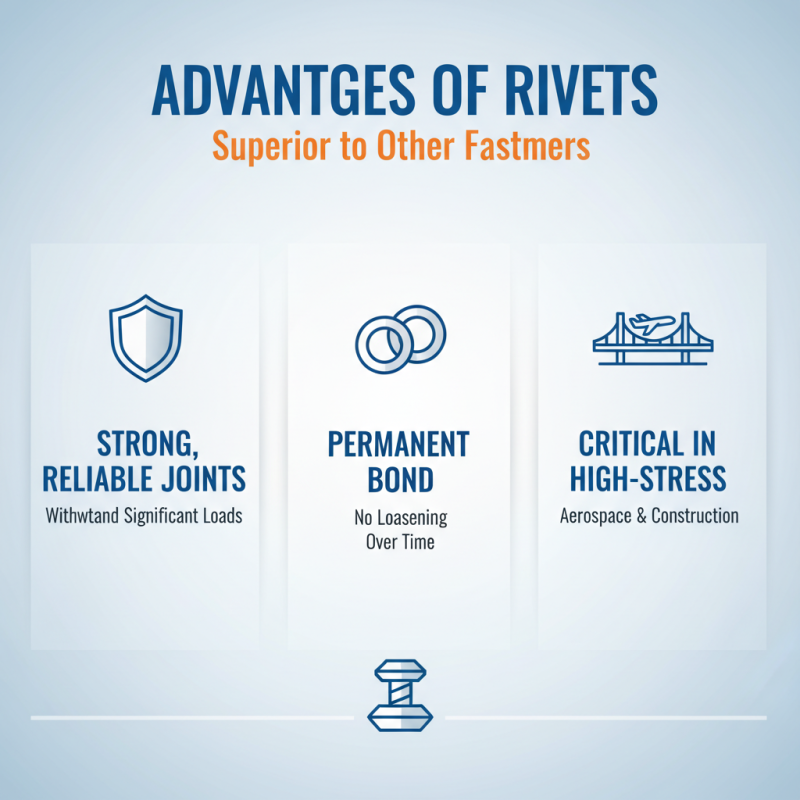
Rivets are widely used in manufacturing due to several key advantages. They offer a strong and reliable joint that can withstand significant loads. Unlike other fasteners, rivets create a permanent bond. Once installed, they do not loosen over time, which is essential in high-stress environments. This permanence can be critical in industries like aviation and construction.
Another benefit of rivets is their resistance to vibration and temperature changes. Standard screws or bolts can sometimes become loose when exposed to such conditions. Rivets, however, maintain their integrity, reducing the need for maintenance. In heavy equipment manufacturing, this reliability is invaluable.
Yet, there are potential drawbacks to consider. Installation requires specialized tools, which can increase upfront costs. Additionally, if a rivet needs replacement, it may require drilling out the old one. This can lead to material wastage. Nevertheless, the strength and longevity of riveted joints often outweigh these challenges, making them a preferred choice in many applications.





 Phone
Phone Send Email
 whatsapp
 Facebook
 Youtube