Why Are Rivets Essential in Modern Engineering and Construction?
Rivets play a pivotal role in modern engineering and construction. They are more than just metal fasteners; they are integral to the structural integrity of numerous constructions. In bridges, buildings, and aircraft, rivets have demonstrated their reliability and strength.
These small yet powerful components hold together large frameworks, embodying the essence of durable design. Rivets resist shear and tensile forces, showcasing their versatility across various applications. Engineers often rely on them for their ease of use and strong bonding capabilities.
However, the reliance on rivets isn't without challenges. As technologies evolve, the methods of joining materials also change. This invites a reevaluation of rivets' roles in contemporary construction. Are they still the best option, or is it time to explore alternatives? These questions are vital as the industry continues to innovate while honoring traditional practices.

The Historical Significance of Rivets in Engineering and Construction
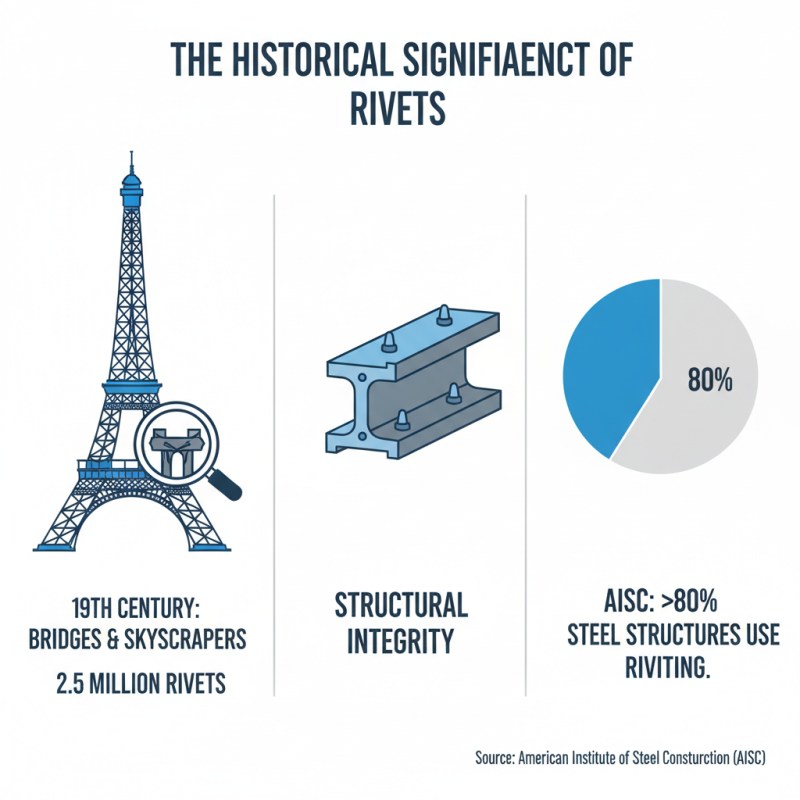
The historical significance of rivets in engineering and construction cannot be understated. As early as the 19th century, rivets played a crucial role in the assembly of bridges and skyscrapers. For instance, the iconic Eiffel Tower was constructed using over 2.5 million rivets, demonstrating their importance in structural integrity. According to the American Institute of Steel Construction (AISC), more than 80% of steel structures utilize some form of riveting.
Rivets are not just a relic of the past. Their durability and strength continue to be studied and applied in modern engineering. A recent report from the International Journal of Advanced Manufacturing Technology highlights rivet fatigue performance in high-stress environments. This research shows that, while advanced welding techniques are prevalent, rivets still provide unmatched reliability in certain applications. Some experts argue that relying solely on modern methods could lead to unforeseen risks.
Despite their historical success, the rivet's role is evolving. Engineers face challenges when integrating rivets into contemporary designs. Tight spaces and modern materials can complicate traditional riveting techniques. This calls for innovation and a re-examination of existing methods. Acknowledging the past may help engineers create more efficient designs for the future, with rivets still part of the solution.
Types of Rivets Used in Modern Applications
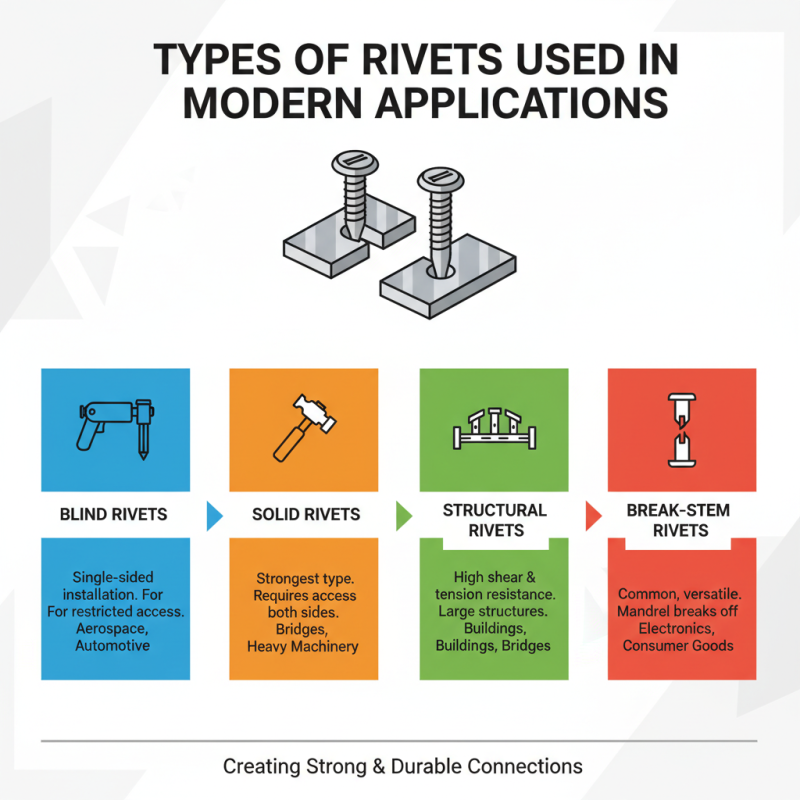
Rivets play a crucial role in modern engineering and construction. They create strong and durable connections between materials, ensuring structural integrity. There are several types of rivets commonly used today, each serving specific purposes and applications.
Solid rivets are among the most traditional types. They offer high strength and are ideal for load-bearing structures like bridges and buildings. In contrast, blind rivets are used when access to both sides of the material is limited. They are versatile and are found in many assemblies, including automotive and aerospace applications.
Another popular type is tubular rivets. Their hollow design allows for lightweight construction without sacrificing strength. These rivets are often employed in situations where materials need to be joined securely but lightweight is a priority. However, the choice of rivet type must consider factors like the materials involved, environmental conditions, and load requirements. Mistakes in this selection process could lead to structural failures or increased maintenance costs. Thus, understanding the nuances of each rivet type is essential for engineers and builders.
The Manufacturing Process of Rivets: From Materials to Assembly
The manufacturing process of rivets begins with material selection. Typically, steel or aluminum is used for their strength and durability. The chosen material must meet specific standards to ensure quality. Once the material is selected, it is cut into cylindrical shapes. These cylinders will be shaped into rivets through various techniques, such as forging or stamping. This step enhances the rivet's structural properties, making it suitable for demanding applications.
After the initial shaping, the rivets go through a heat treatment process. This process improves their strength and ductility, which are critical in construction. Following heat treatment, the rivets are subjected to surface finishing. This step is important, as it removes any imperfections and enhances corrosion resistance. Finally, the rivets are ready for assembly. Workers must ensure that each rivet fits securely in its designated spot, which is crucial for the overall integrity of the structure.
Despite the careful process, issues can arise. Variations in material quality or improper assembly can lead to potential failures. Investigating these problems is essential for continuous improvement. The process of manufacturing rivets is complex, requiring attention to detail and a commitment to quality. The importance of this process cannot be overstated, as it impacts the safety and durability of modern engineering and construction projects.
Advantages of Using Rivets Over Other Fastening Methods
Rivets offer unique advantages in modern engineering and construction that make them a preferred fastening method. Unlike bolts or screws, rivets create a permanent bond. This bond enhances structural integrity, especially in applications like bridges and aircraft. Their ability to distribute loads evenly adds reliability under stress.
The installation process of rivets is straightforward yet demands precision. While riveting tools are necessary, the skill involved can lead to inconsistencies if not properly managed. Nevertheless, once correctly installed, rivets resist loosening, providing a firm hold over time. This quality is crucial in high-vibration environments, where other fasteners may fail.
Moreover, rivets are often more cost-effective than alternatives, due to lower material and labor costs. However, the challenge lies in their removal. If a structure requires modifications, rivets can be difficult to replace, which may lead to concerns about adaptability. Overall, while rivets showcase several benefits, their application should be evaluated based on specific project needs.
Advantages of Using Rivets Over Other Fastening Methods
Future Developments and Innovations in Rivet Technology
The future of rivet technology is on the brink of transformation. Innovations are emerging that enhance both strength and efficiency in construction practices. For instance, advanced materials like high-strength aluminum alloys are being utilized. These materials can improve weight capacity while reducing overall structural weight.
Recent studies indicate a rising demand for sustainable construction practices. The Global Riveting Market is projected to reach $6.5 billion by 2025, driven by these innovative techniques. Industry experts emphasize that new manufacturing technologies, such as additive manufacturing, can create custom rivets with enhanced performance metrics. This shift may require a reevaluation of traditional methods.
However, challenges remain in adopting these advancements. The learning curve for engineers and construction workers can be steep. Moreover, balancing cost-effectiveness with these new technologies is vital. As the sector evolves, ongoing training and research will be critical to maximize these innovations in rivet technology.
Why Are Rivets Essential in Modern Engineering and Construction? - Future Developments and Innovations in Rivet Technology
| Dimension |
Description |
Current Innovation |
Future Outlook |
| Material Strength |
Refers to the load-bearing capacity of rivets used for structural applications. |
Development of high-strength aluminum alloys for enhanced performance. |
Potential use of composite materials to reduce weight while maintaining strength. |
| Corrosion Resistance |
Ability of rivets to withstand environmental factors without degrading. |
Introduction of coatings such as zinc and ceramic to enhance durability. |
Research into self-healing materials that can repair minor corrosion damage. |
| Manufacturing Process |
Techniques used in producing rivets, affecting their quality and consistency. |
Utilization of 3D printing technologies for custom rivet production. |
Automation and advanced robotics in rivet manufacturing for scalability. |
| Connection Efficiency |
Assessment of how well rivets perform in joining different materials. |
Development of rivets designed specifically for dissimilar materials. |
Innovations in joining techniques that enhance load distribution and reduce stress concentrations. |






 Phone
Phone Send Email
 whatsapp
 Facebook
 Youtube