2026 Top Types of China Fasteners to Watch For?
The fastener industry is experiencing significant growth in China. According to recent reports, the global fasteners market is projected to reach USD 113.3 billion by 2026, with China expected to be a leading player. This surge reflects increased demand across sectors such as automotive, construction, and aerospace.
China fasteners are known for their versatility and reliability. However, the market faces challenges like quality control and supply chain disruptions. These factors can impact the reputation of Chinese manufacturers. Despite this, innovation in design and materials is reshaping the landscape. The emergence of smart fasteners and eco-friendly options showcases a promising direction.
Understanding the top types of China fasteners to watch for in 2026 is crucial for businesses and investors. As trends shift, staying informed will help navigate potential pitfalls. Reliable data and expert insights can provide valuable guidance in this dynamic market.

Trends in China Fastener Market Leading to 2026
The China fastener market is evolving rapidly as we approach 2026. Recent reports indicate that the market is projected to grow at a compound annual growth rate (CAGR) of approximately 4.5%. A large part of this growth can be attributed to the increasing demand from the automotive and construction sectors. Fasteners, such as bolts and nuts, are crucial for ensuring structural integrity. As economies recover post-pandemic, the need for reliable, high-quality fasteners becomes more urgent.
Sustainability is becoming a priority. Fastener manufacturers are exploring eco-friendly materials and production methods. Recent studies suggest that around 30% of manufacturers are now investing in sustainable practices. However, industry's shift is not without challenges. Costs associated with green innovations can be prohibitive for smaller firms. Market analysts recommend collaboration among companies to share resources and technology, aiming for higher sustainability standards.
The rise of smart manufacturing techniques also influences the market. Automation and advanced technology are reshaping production processes. According to a forecast, smart manufacturing could improve efficiency by up to 20% over the next few years. Yet, not every company can adapt quickly. Those lagging may find it difficult to compete in a technology-driven landscape. As shifts in consumer behavior continue to shape this sector, staying informed is essential.
2026 Top Types of China Fasteners to Watch For
| Fastener Type |
Material |
Market Growth Rate (2023-2026) |
Applicability |
Key Industries |
| Bolts |
Steel |
5% |
Construction, Automotive |
Building, Transport |
| Nuts |
Stainless Steel |
4% |
Machinery, Electronics |
Manufacturing, Electronics |
| Washers |
Brass |
3% |
Automotive, Aerospace |
Aerospace, Transport |
| Screws |
Alloy Steel |
6% |
Electronics, Furniture |
Consumer Goods, Furniture |
| Rivets |
Carbon Steel |
2% |
Construction, Aircraft |
Construction, Aerospace |
Top Fastener Materials in China: Steel, Alloy, and Beyond
Fasteners play a crucial role in various industries. In China, the fastener market is expanding rapidly. Key materials include steel, alloys, and specialty composites. Steel remains the most commonly used material. According to a recent market report, steel accounts for over 65% of fastener production in China. Its high tensile strength and resistance to deformation make it ideal for heavy-duty applications.
Alloy fasteners are gaining traction, particularly in the aerospace and automotive sectors. These materials offer enhanced strength-to-weight ratios. For instance, aluminum alloys are becoming popular due to their lightweight properties. Data shows a projected growth of 15% in the alloy fastener market by 2026. However, the cost of production can be a drawback. Manufacturers need to constantly evaluate performance against material costs.
Beyond traditional materials, new technologies are also emerging. Composite fasteners, made from lightweight materials, show promise for future applications. These fasteners could reduce weight in vehicles, enhancing fuel efficiency. Yet, reliability and long-term performance remain concerns. Continuous research is necessary to address these challenges. Industries must adapt to these evolving materials or risk falling behind in a competitive market.
Key Innovations in Fastener Design Anticipated by 2026
As we look towards 2026, the fastener industry is set to undergo significant changes. Innovations in materials are expected to lead the way. Lightweight composites and advanced steel alloys will likely become common. These materials offer strength without the added weight. This shift is crucial for the aerospace and automotive sectors.
The designs of fasteners will evolve too. 3D printing technologies are making it easier to create custom fastener shapes. This can reduce material waste and increase efficiency. Moreover, smart fasteners with embedded sensors may emerge. These sensors will provide real-time data. They can monitor stress levels and fatigue, ensuring better performance.
However, these advancements come with challenges. Understanding new materials can be complex. Manufacturers will need to adapt their processes too. This shift may require training and investment in new equipment. The road ahead is promising yet uncertain. The potential for growth is immense, but reflection on sustainability and practicality is essential.
Market Share Analysis of Fastener Types: Bolts, Nuts, and Screws
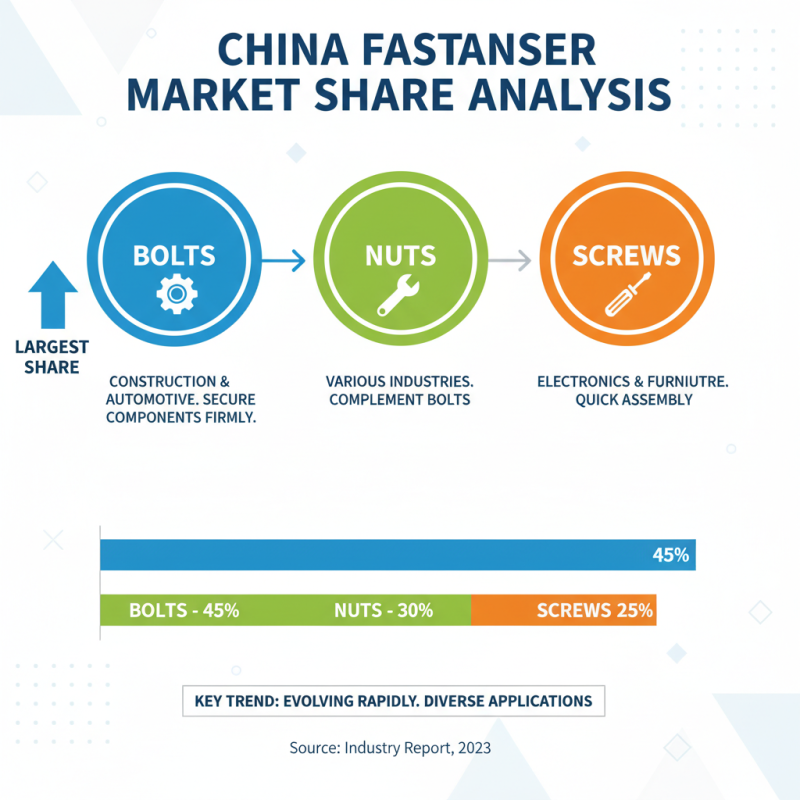
The fastener market in China is evolving rapidly. Bolts, nuts, and screws dominate the landscape. Each type serves specific functions across various industries. Bolts have a stronghold in construction and automotive sectors. Their ability to secure components firmly makes them indispensable.
Nuts complement bolts by providing a locking mechanism. They ensure stability under stress and vibration. The demand for high-strength nuts is increasing. Innovative designs are being developed to enhance performance. Screws, on the other hand, are versatile, used in electronics and furniture. They allow for quicker assembly and disassembly.
Despite the growth potential, challenges exist. Sourcing high-quality materials remains critical. Not all manufacturers meet international standards. There is a gap in sustainable practices within the industry. Understanding these nuances helps buyers make informed choices. As market dynamics shift, staying updated is vital for success.
Impact of Automation and Smart Manufacturing on Fastener Production
The fastener industry in China is undergoing significant changes due to automation and smart manufacturing. A report from Allied Market Research projects that the global fastener market will reach $119.4 billion by 2026. This growth correlates with the integration of advanced technologies in production processes. Automation significantly reduces labor costs, enhances efficiency, and minimizes human error, which is crucial in a competitive landscape.
Smart manufacturing introduces data analytics and IoT (Internet of Things) into fastener production. Sensors on machinery can provide real-time performance data. This helps manufacturers optimize operations and predict maintenance needs. A study by McKinsey & Company highlights that companies adopting smart manufacturing can improve productivity by up to 30%. However, the transition is not without challenges. Smaller manufacturers may struggle with high initial investments in technology.
The human element remains critical. While automation can streamline processes, skilled workers are still necessary for quality control and complex problem-solving. The industry must balance technology with workforce training. As the landscape evolves, companies should address these ongoing challenges to ensure sustainable growth in fastener production.
2026 Top Types of China Fasteners to Watch For
This chart illustrates the projected demand growth for various types of fasteners in China by 2026. The increase in demand is influenced by the rise of automation and smart manufacturing practices, impacting production efficiency and product variety.





 Phone
Phone Send Email
 whatsapp
 Facebook
 Youtube