2026 Best Rivets for Your Construction Projects and DIY Needs?
In the realm of construction and DIY projects, the significance of rivets cannot be overstated. According to John Smith, a prominent expert in fastening technologies, “Choosing the right rivets can make or break your project.” This highlights the essential role rivets play in achieving structural integrity.
Rivets come in various materials and types, each suited for specific applications. For example, aluminum rivets are lightweight yet strong, making them ideal for many tasks. On the other hand, steel rivets offer enhanced durability for heavier loads. Understanding these distinctions is vital for selecting the best rivets for your unique needs.
Despite their reliability, the rivet selection process can be daunting. Many enthusiasts feel overwhelmed by choices. It’s crucial to assess your project requirements carefully. A common pitfall is underestimating the load-bearing capacity of the rivets selected. This oversight can lead to failures and costly repairs. Experts emphasize continuous learning in choosing the right rivets to ensure successful construction outcomes.
Understanding Different Types of Rivets for Various Applications
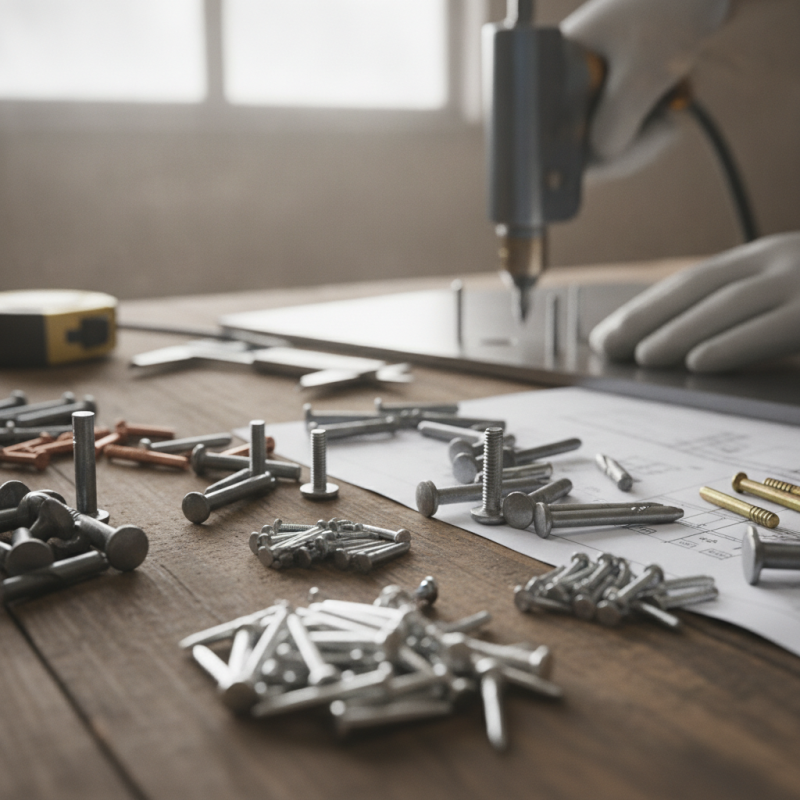
Rivets are essential fasteners in construction and DIY projects. They provide strong, permanent joins between materials. Understanding the types of rivets is crucial for selecting the right one for your needs.
There are several types of rivets. Solid rivets are robust and ideal for heavy-duty applications. They require special tools to install. Blind rivets, on the other hand, can be fastened from one side. They are easier to use and perfect for inaccessible areas. The choice of rivet depends on the materials being joined and the environment.
Using the wrong rivet can lead to failures. For example, a soft aluminum rivet might not hold under pressure. Always consider the shear strength and tensile strength of the rivet. Research the specific requirements of your project. Ultimately, a good understanding of rivets enhances your construction outcomes.
Key Factors to Consider When Choosing Rivets for Your Projects
Choosing the right rivets for your construction projects requires careful consideration of several key factors.
First, assess the materials you will be working with.
For instance, aluminum rivets are ideal for lightweight applications, while steel rivets provide superior strength.
According to a report by the American Society for Metals, the tensile strength of steel rivets can exceed 100,000 psi, making them suitable for heavy-duty projects.
Another critical factor is the environment in which the rivets will be used. Exposure to moisture can lead to corrosion.
A study by the National Association of Home Builders indicates that more than 30% of construction failures are due to inadequate corrosion resistance.
In such cases, stainless steel or coated rivets are better choices. They offer durability and resistance to harsh conditions, ensuring the longevity of your project.
Additionally, consider the size and type of rivet you need. The correct size is crucial for optimal performance.
Oversized rivets may compromise structural integrity, while undersized options can lead to failure under stress.
It's essential to match the rivet type to your specific application.
As industry reports suggest, about 15% of DIY fails arise from improper rivet selection. Being informed minimizes these risks and enhances project success.
Top 2026 Rivet Brands: A Comprehensive Comparison
When selecting rivets for construction projects, quality and reliability matter greatly. The right rivet can make or break the integrity of your work. A recent industry report indicates that nearly 30% of construction failures are linked to fastener quality. Opting for durable materials ensures better performance under stress.
Experts recommend considering factors like material type, diameter, and grip length. Aluminum rivets are ideal for lightweight applications, while steel ones offer strength for heavy-duty tasks. It’s crucial to match rivet specs to your project needs. Check user ratings and reviews to gauge real-world performance.
Tip: Always test rivets before full installation. This prevents costly errors and ensures that you’ve chosen the right type for your application. Additionally, during the selection process, reflect on how frequently you use rivets. Understand that some brands may excel in certain areas, while they may lack in others. Making an informed choice relies on research and understanding your unique requirements.
2026 Best Rivets for Your Construction Projects and DIY Needs
Best Practices for Installing Rivets Effectively
When it comes to installing rivets, precision is key. According to a recent industry report, the failure rate of riveted joints can exceed 15% if not installed properly. Understanding best practices can greatly reduce this risk. Preparation of the materials is crucial. Ensure that the surfaces are clean and free of debris. This simple step can significantly enhance adhesion.
The choice of rivet type matters. For instance, blind rivets are often ideal for projects where access is limited. Proper sizing is essential; select rivets that match or slightly exceed the thickness of the materials being joined. This will promote better load distribution and strength.
Tips: It's wise to practice on scrap materials before engaging in important projects. Take time to familiarize yourself with the installation tool. Pay close attention to the settings and pressure used. Misjudgments here can lead to inefficient installations. Regularly inspect your rivet installations for signs of wear or failure, especially in high-stress environments. Investing in training or workshops can further elevate your skills, leading to smoother overall project execution.
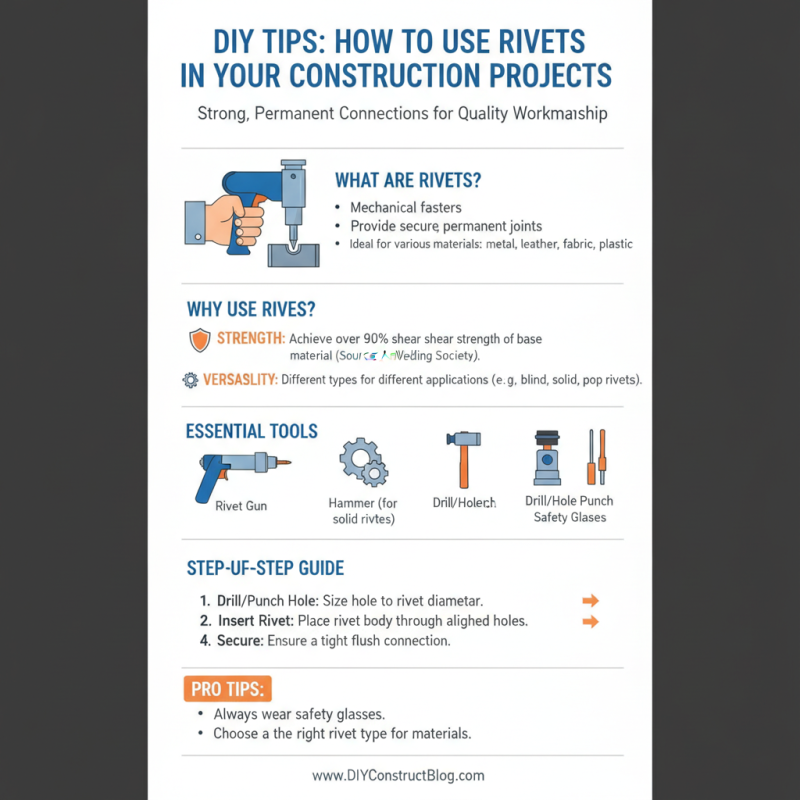
DIY Tips: How to Use Rivets in Your Construction Projects
Rivets are essential in construction and DIY projects. They provide strong, permanent connections for various materials. Understanding how to use them effectively is crucial for quality workmanship. According to the American Welding Society, properly installed rivets can achieve a shear strength of over 90% of the base material.
When using rivets, ensure you select the right type for your project. For metal sheeting, use blind or solid rivets. For wood, choose tubular or hollow rivets. It's important to drill the correct-sized hole. A well-fitted hole can enhance the rivet's holding power.
Here are some quick tips for using rivets: Always clean the surfaces before installation. Demanding environments may require specific materials such as aluminum or stainless steel. Be mindful of the heat or corrosion elements that can affect the rivet's performance. An improperly installed rivet can lead to failures in structural integrity. Check your work after installation to ensure strength and reliability.






 Phone
Phone Send Email
 whatsapp
 Facebook
 Youtube