How to Choose the Right Custom Fasteners for Your Project?
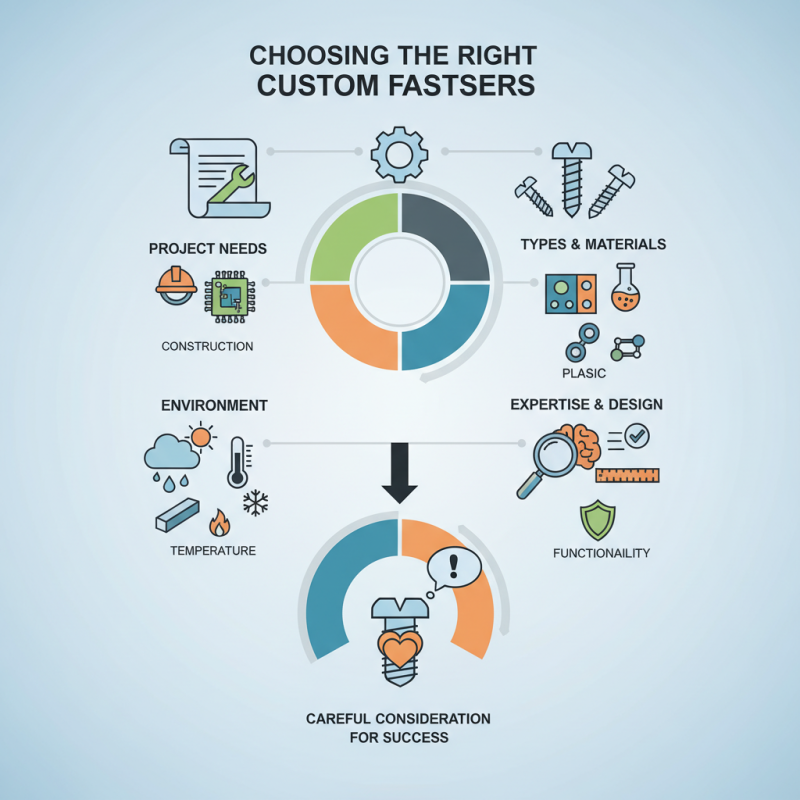
Choosing the right custom fasteners can significantly impact your project's success. These small components play a vital role in various applications, from construction to electronics. Understanding your project's specific needs is essential.
Custom fasteners come in numerous types and materials. Each option offers distinct advantages and challenges. The selection process can be overwhelming. Many overlook critical factors, leading to costly mistakes. It's crucial to consider the environment where the fasteners will be used. This can influence your choice dramatically.
Expertise in materials and design is key. An informed decision helps ensure durability and functionality. Take time to evaluate your requirements. Custom fasteners should not be an afterthought. They deserve careful consideration to fulfill their intended purpose effectively.
Understanding the Basics of Custom Fasteners for Your Project
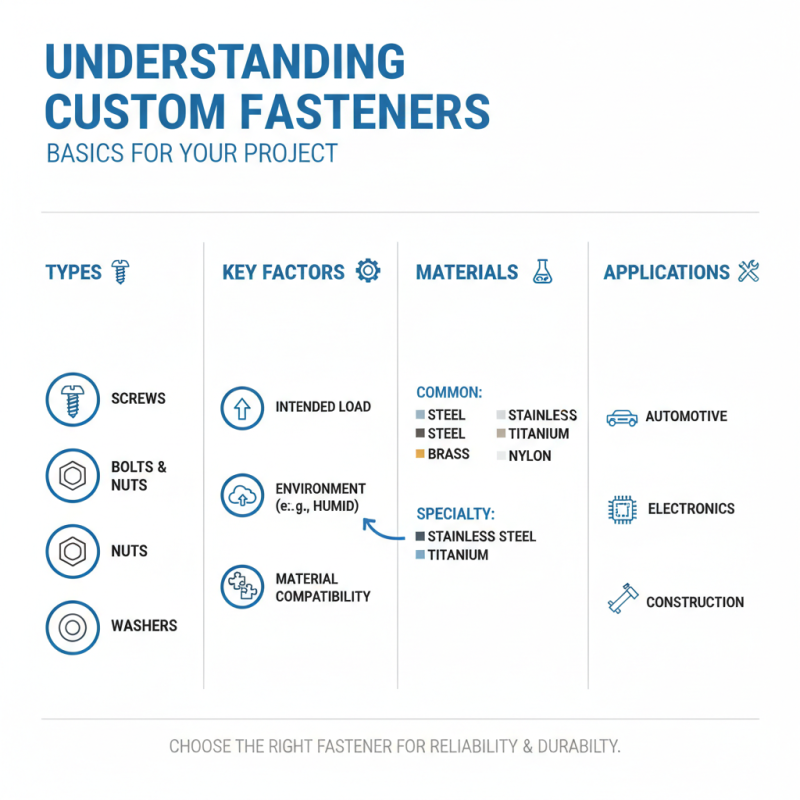
Choosing the right custom fasteners requires a clear understanding of their types and applications. Fasteners can vary significantly in material, size, and design. Common types include screws, bolts, nuts, and washers. Each serves different functions. The intended load, environment, and material compatibility are essential factors to consider. For instance, if you're working in a humid environment, stainless steel might be a suitable choice due to its corrosion resistance.
Delving deeper, it’s crucial to recognize that not all fasteners are equal. Weight-bearing capabilities and stress factors differ among designs. Many engineers overlook these details, leading to project complications. Analyzing the specific requirements of your project will provide clarity. In addition, you must consider the manufacturing process of the fasteners. While some are readily available, custom-made options can enhance fit and function.
Understanding tolerances and finishes is another aspect often underestimated. The right finish can improve durability but may increase costs. It’s vital to balance quality and budget. A reflection on previous project outcomes can inform your decisions. Learning from past mistakes provides insights that can lead to better choices. Selecting the appropriate custom fasteners is not just about function; it’s about aligning with project demands and ensuring reliability.
Identifying the Specific Requirements of Your Project
When selecting custom fasteners, understanding your project's specific requirements is crucial. Every project has unique needs based on materials, environment, and load. Begin by assessing the materials you'll be fastening. Different materials may require specific types of fasteners. For example, steel fasteners are suitable for heavy-duty applications, while plastic options may work for lighter tasks.
Consider the environment where your project will be executed. Will it be exposed to moisture, chemicals, or extreme temperatures? Fasteners must withstand these conditions. Corrosion-resistant options could be necessary for outdoor use. Think about the load the fasteners must bear. This might influence the size and type needed for optimal performance.
Sometimes, the specifications can be overwhelming. Projects may evolve, leading to changes in requirements. Reflect on past experiences with custom fasteners. Did a previous choice lead to unexpected failures or replacements? These insights are valuable. They guide you toward better choices for your current project. Engaging with specialists can also help clarify these requirements. They can provide authoritative knowledge to enhance your project’s reliability.
How to Choose the Right Custom Fasteners for Your Project?
| Project Type |
Material Type |
Size Requirements |
Load Capacity |
Environmental Conditions |
| Construction |
Stainless Steel |
M6 to M20 |
High |
Extreme Weather |
| Automotive |
Aluminum |
M5 to M10 |
Medium |
Moderate Temperature |
| Electronics |
Plastic |
M2 to M4 |
Low |
Controlled Environment |
| Aerospace |
Titanium |
M8 to M16 |
Very High |
Harsh Conditions |
| Marine |
Brass |
M4 to M12 |
Medium |
Corrosive Environment |
Exploring Different Types of Custom Fasteners and Their Applications
Custom fasteners play a pivotal role in various industries, influencing both performance and reliability. Understanding the range of fasteners available is essential. Common types include screws, bolts, and nuts, each designed for specific applications. For example, screws are often preferred in woodwork, while bolts are crucial for heavier machinery. According to a 2022 report by the Global Fastener Market, the custom fasteners segment grew by 5.2%, highlighting their increasing relevance in manufacturing and construction.
The choice of custom fasteners is not only about type but also material. Stainless steel, aluminum, and plastic can impact durability and corrosion resistance. A 2021 study showed that 40% of fastener failures were due to unsuitable material selection. Industries such as automotive and aerospace emphasize material properties, as failures can lead to serious safety issues.
Customization is another key factor. Fasteners can be tailored for specific lengths or coated for added protection. Yet, this introduces complexity. An improperly specified fastener can compromise project integrity. Continuous learning from past mistakes is vital for design engineers. They should regularly review failures to avoid repeating them in future projects. Understanding application requirements ensures you select the right custom fastener for success.
Evaluating Material Options for Durability and Performance
When choosing custom fasteners, material selection is vital for ensuring durability and performance. The fasteners must withstand different conditions. Common materials include stainless steel, carbon steel, and plastic. Each offers unique benefits and drawbacks. For example, stainless steel resists rust and corrosion, making it ideal for outdoor use. However, its cost can be a barrier for some projects.
Recent industry reports indicate that nearly 45% of fastener failures stem from improper material selection. A detailed evaluation of the environment and application is necessary. If a project requires flexibility, nylon or plastic fasteners can provide that without sacrificing durability. On the other hand, high-stress situations may necessitate the strength of alloy steel.
It is critical to consider the fastener's performance under load. For instance, ASTM standards set guidelines for tensile strength and fatigue resistance. Ignoring these standards can lead to product failure. Balancing material properties and costs often poses challenges. Reflecting on past projects can inform better decisions for future ones. Understanding these dynamics is key to selecting the right custom fasteners for any application.
Material Options for Custom Fasteners: Durability and Performance
Assessing Manufacturer Capabilities and Customization Options
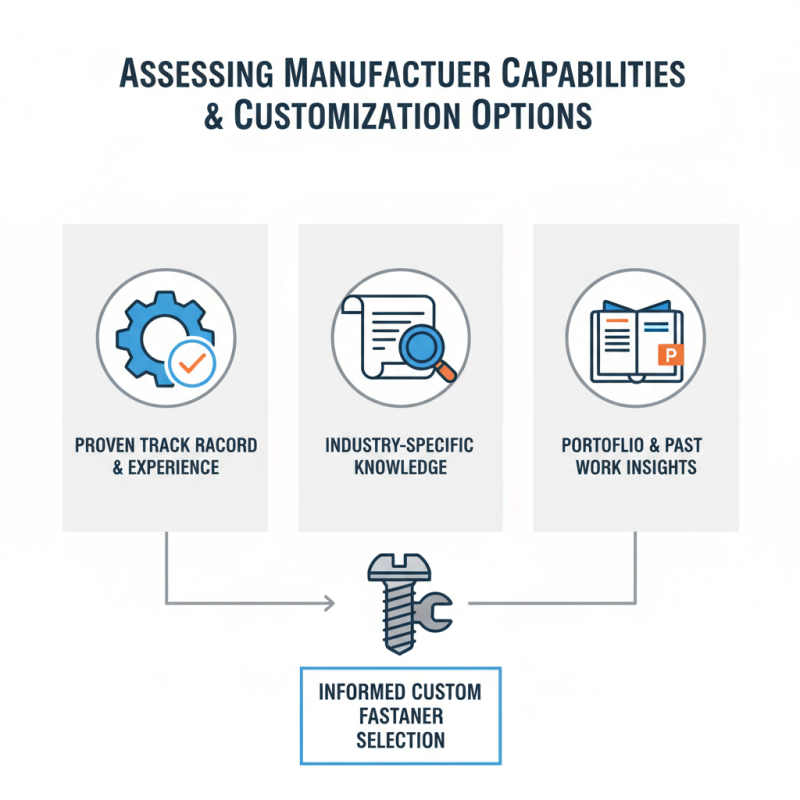
When selecting custom fasteners, evaluating manufacturer capabilities is crucial. Look for manufacturers with a proven track record. They should demonstrate experience in your specific industry. This can help ensure that they understand your project's unique requirements. Don't hesitate to ask for their portfolio. It can provide insights into their past work.
Customization options are equally important. Some manufacturers offer a variety of materials, sizes, and finishes. This flexibility can enhance the functionality of your fasteners. When reviewing options, consider how they align with your project needs. Think about the environment where the fasteners will be used. Will they face high temperatures or moisture?
Tips: Always request samples before making a bulk order. This allows you to assess the quality firsthand. Communication is key, so ask detailed questions regarding their processes. Remember, costs should align with your budget constraints. However, cutting corners on quality can lead to future problems. Be reflective about the balance between cost and value.




 Phone
Phone Send Email
 whatsapp
 Facebook
 Youtube