China Best Bolts Quality Types and Applications Explained?
In the fast-evolving world of manufacturing, bolts play a critical role. Experts estimate that the global bolts market will reach $27.5 billion by 2026, driven by demand from construction and automotive industries. Paul Chang, a leading authority in fasteners, states, "Understanding bolt types and their applications is vital for safety and performance."
China stands out as a key player in bolt production, delivering quality and variety. The types range from hex bolts to carriage bolts, each with unique applications. For instance, structural bolts provide strength in building frameworks, while flange bolts serve critical roles in mechanical assemblies. However, with numerous options, the choice can complicate decisions, demanding informed selections.
The need for precision and reliability in bolts cannot be overstated. A single failure can lead to significant consequences. Thus, it is essential to thoroughly evaluate factors such as material, size, and load capacity. While this might seem daunting, knowledge empowers industries to enhance performance and safety in their projects.

Understanding the Importance of Bolts in Engineering Applications
Bolts play an essential role in engineering applications. They secure components together, ensuring structural integrity. Without them, machines and buildings would fail to function correctly. The quality of bolts directly affects the performance of any system. Low-quality bolts can lead to catastrophic failures. Hence, selecting appropriate bolts is crucial.
In various engineering fields, different bolt types are used. For example, high-strength bolts are popular in construction projects. They withstand heavy loads and resist shear forces. On the other hand, stainless steel bolts are commonly used in marine environments. They resist corrosion and prolong lifespan. Engineers must understand these characteristics to avoid potential issues.
While many focus on cost, sacrificing quality can be detrimental. It's vital to assess a bolt's material and design. Often, people overlook these details. This leads to failures during critical operations. Careful consideration is necessary to achieve long-term success. Understanding these elements ensures better outcomes in engineering projects.
Overview of Different Types of Bolts and Their Specifications
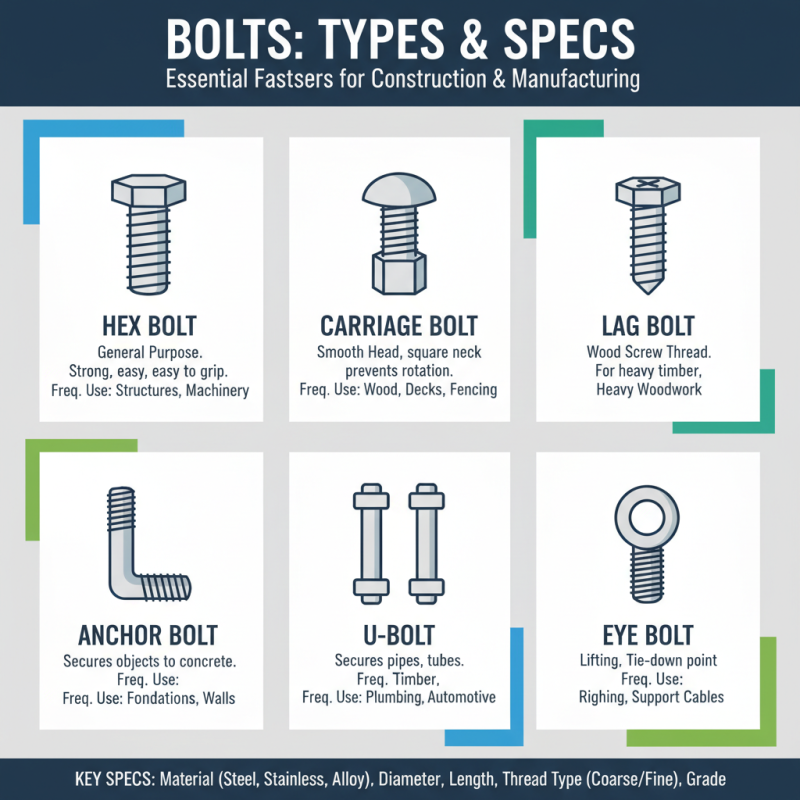
Bolts are essential fasteners in construction and manufacturing. Different types cater to specific needs. Understanding these varieties helps in selection and application.
Common bolt types include hex bolts, carriage bolts, and lag bolts. Hex bolts feature a hexagonal head, ideal for mechanical assemblies. Carriage bolts have a rounded head and a square neck, perfect for wood connections. Lag bolts, with their coarse threads, provide strong support in heavy-duty applications.
Specifications vary widely. Length, diameter, and thread type are key factors. Standard measurements help in choosing the right bolt. Sometimes, it’s easy to overlook the material. Stainless steel offers corrosion resistance, while carbon steel provides strength. Reflect on your project requirements carefully. Not every bolt suits every task. Consider potential misapplications to avoid failures.
Key Quality Standards for Bolts in the Chinese Manufacturing Industry
In the Chinese manufacturing industry, quality standards for bolts play a crucial role. These standards ensure that bolts meet specific requirements for strength, durability, and reliability. The combination of various materials, such as carbon steel or stainless steel, affects the final product's performance. Regular testing is essential to confirm that these bolts can withstand demanding conditions.
Chinese manufacturers often follow national and international standards like GB, ISO, and ASTM. These guidelines specify dimensions, mechanical properties, and corrosion resistance, influencing how bolts are designed and produced. However, compliance with these standards is not always flawless. Some manufacturers fall short in quality control, leading to inconsistencies in bolt performance.
Understanding these quality standards helps in selecting the right bolts for specific applications. For example, bolts used in the automotive industry require higher tensile strength than those in furniture manufacturing. It's vital for engineers and procurement professionals to choose bolts that will sustain desired performance levels. Quality issues in bolts can lead to significant safety concerns and project failures. Continuous improvement and adherence to quality standards are necessary for reliability in the manufacturing process.
Bolts Quality Types and Applications in China
Applications of High-Strength Bolts in Structural Engineering Projects
High-strength bolts are crucial in structural engineering projects. They provide durability and stability to structures, from bridges to skyscrapers. These bolts are designed to withstand heavy loads and extreme conditions. Their applications are diverse and can significantly impact the safety and longevity of a project.
When selecting high-strength bolts, many factors must be considered, such as the materials being joined and environmental exposure. In critical areas, inconsistent quality can lead to failures. Engineers must ensure proper specifications and installation practices. Regular inspections are essential to identify potential weaknesses early.
Tips: Always verify the bolt specifications against project requirements. Test samples whenever possible to assess their strength. Understanding the environment where the bolts will be used can help in choosing the right type. In some cases, engineers overlooked environmental factors, leading to unexpected failures.
China Best Bolts Quality Types and Applications Explained - Applications of High-Strength Bolts in Structural Engineering Projects
| Bolt Type |
Material |
Strength Grade |
Common Applications |
| Hexagon Head Bolt |
Carbon Steel |
Grades 4.6 / 8.8 |
Construction, Machinery |
| Tension Control Bolt |
Alloy Steel |
Grade 8.8 / 10.9 |
Pre-engineered Structures |
| Square Head Bolt |
Stainless Steel |
Grades 304 / 316 |
Marine Applications |
| Sleeve Bolt |
Carbon Steel |
Grade 4.6 |
Building Frames |
| Grip Range Bolt |
Alloy Steel |
Grade 10.9 |
High-Rise Buildings |
Emerging Trends in Bolt Production and Technology in China
In recent years, China has become a major player in the bolt production industry. Emerging trends show a shift towards more advanced manufacturing technologies. Automation is increasingly being integrated into the production process. This ensures greater precision and efficiency. Robots now handle tasks that were once labor-intensive. The result is a significant reduction in production times.
Sustainability is another key focus. Many manufacturers are exploring eco-friendly materials and practices. This reduces the environmental impact of bolt production. Alternative materials are being tested for durability and strength. However, challenges remain in finding the right balance between performance and sustainability. The push for innovative designs continues, but it is not without its pitfalls.
Quality control is crucial as technology evolves. With rapid advancements, maintaining consistent quality is a challenge. Some companies struggle to keep up with new standards. A well-documented process is essential to prevent defects. Collaboration within the industry can lead to shared knowledge. This can help ensure that the advancements in technology truly benefit the production of high-quality bolts.





 Phone
Phone Send Email
 whatsapp
 Facebook
 Youtube