How to Choose the Right Washers for Your Project?
Washers are small components, but their role can shape how reliably a bolted joint performs. They spread clamping force, help protect the surface, and can provide spacing or sealing when the design calls for it. Yet choosing one by appearance alone can lead to poor fit or damage. A flat washer may suit a general load-spreading task, while a wider fender washer can cover a larger hole or softer material. Locking washers have specific uses, but they are not a guaranteed cure for every loosening problem. Not interchangeable by default. The application matters.
Choosing the right Washers starts with the fastener size, hole diameter, expected load, and available clearance. Material matters, too: steel, stainless steel, and nonmetallic options behave differently in corrosive, wet, or electrically sensitive settings. Check the equipment or fastener manufacturer’s specifications, especially for critical joints, rather than relying on a familiar part from the workshop drawer. For sealing, confirm that the washer’s material and design suit the fluid, temperature, and mating surfaces. Small details matter. It is easy to focus on bolt strength and overlook the bearing surface beneath it. This guide explains the main washer types, practical selection factors, and common fit mistakes. Some projects still involve trade-offs, so verify the choice against the actual assembly before installation.
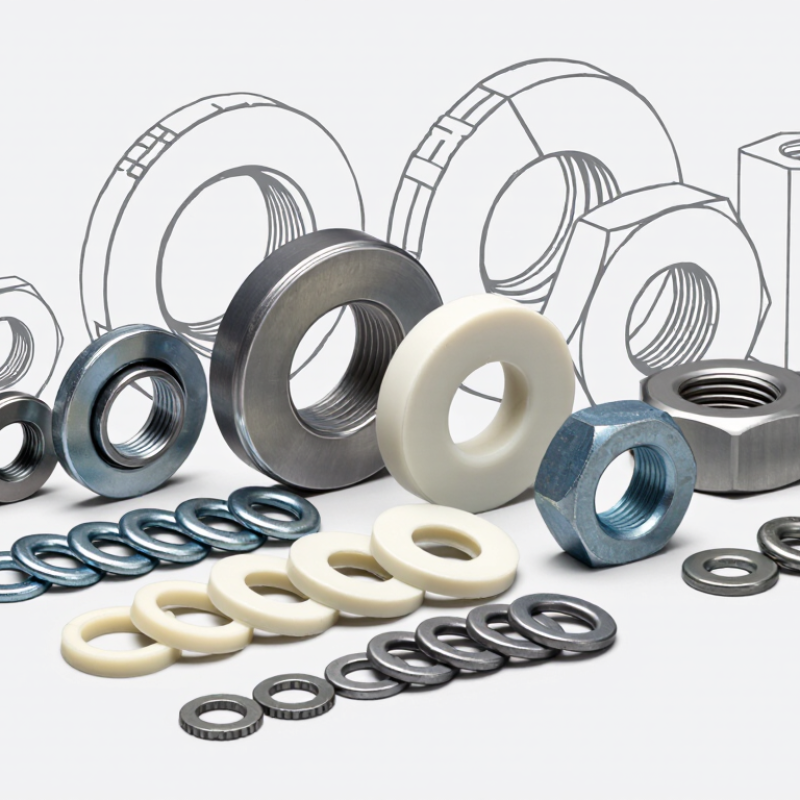
Define the Washer’s Function in Your Project
Choosing a washer begins with its function, not its outer appearance.
Ask what the joint must resist: load spreading, loosening, corrosion, vibration, or moisture.
A flat washer distributes clamping force across a wider surface.
This helps prevent bolt-head or nut embedment into softer materials. It is not a universal solution.
For structural steel connections, use washers specified by the applicable engineering standard.
ASTM F436/F436M covers hardened washers designed for high-strength structural fasteners. Their hardness helps resist deformation under heavy preload.
The American Institute of Steel Construction also requires suitable washer placement in many structural joints.
Small details matter.
A washer with the wrong inner diameter can interfere with installation or reduce bearing contact.
Material choice deserves equal attention.
The World Steel Association reported global crude steel production of about 1.89 billion tonnes in 2023, showing steel’s continued industrial importance.
Yet similar-looking steel washers can behave differently in wet, salty, or chemically exposed environments.
Stainless, coated, hardened, or insulating washers serve different purposes.
Check temperature, surface hardness, bolt grade, and exposure conditions before ordering.
Field inspections often find washers selected by size alone.
I have seen that mistake become expensive.
Even a properly torqued joint may fail to perform when the washer’s actual function was never defined.
Match Washer Types to the Required Application
Choosing the right washer starts with the joint, not the hardware drawer. A flat washer spreads clamping force across the material. It suits timber, sheet metal, and ordinary bolted connections. For soft surfaces, choose a larger outside diameter. This reduces dents around the bolt hole. Measure the bolt size, hole diameter, and available space before ordering.
Spring washers can help resist loosening under vibration, but they are not a universal solution. I have seen them fitted to rigid joints where locking performance remained poor. A prevailing-torque nut or a tested locking method may work better. Use fender washers when a wide bearing area matters, such as securing thin panels. Sealing washers are more suitable for outdoor joints, tanks, and roof sheets. Their rubber or polymer layer must match the temperature and fluid exposure.
Material selection matters just as much. Stainless steel can resist corrosion, while hardened steel handles higher pressure and wear. Avoid pairing metals that may create galvanic corrosion in wet conditions. Check the washer’s load rating, thickness, hardness, and surface finish. Tighten to the specified torque, because overtightening can crush soft materials. The choice is sometimes less obvious than expected. Recheck the joint after installation, especially when vibration, heat, or moisture may change its performance.
Select the Correct Material and Corrosion Resistance
How to Choose the Right Washers for Your Project?
Select the Correct Material and Corrosion Resistance
Washer material should match both the fastener and the working environment. Indoor steel assemblies may use zinc-plated steel washers. Outdoor structures often need stainless steel. Coastal locations demand closer attention because salt accelerates corrosion.
The NACE IMPACT study estimated global corrosion costs at approximately 2.5 trillion dollars annually, equal to about 3.4% of global GDP. That figure shows why material selection deserves more than a quick catalog decision. Stainless steel 304 performs well in many general environments. Stainless steel 316 offers stronger resistance where chlorides and marine exposure are present. However, 316 is not automatically perfect. Crevices, trapped water, and poor cleaning can still create corrosion problems.
Think about galvanic corrosion. Dissimilar metals can react when moisture connects them. An aluminum panel with a stainless washer may require an insulating layer. I have seen small compatibility gaps become expensive maintenance issues. This is easy to overlook.
Tips: Check ISO 9223 atmospheric exposure categories before choosing a finish. Review the manufacturer’s corrosion data, not only the product photograph. For critical joints, test the complete assembly under realistic humidity, salt, and temperature conditions. Salt-spray results can help compare coatings, but they do not fully predict field performance. Recheck washer thickness and load distribution, too. A corrosion-resistant washer may still fail if it bends under pressure.
How to Choose the Right Washers for Your Project?
Select the washer material according to the expected environment and corrosion exposure.
The chart uses an indicative 1–5 suitability score, where 5 represents the strongest general resistance for the listed environment. Zinc-plated carbon steel is typically suitable for dry indoor use, while stainless steel 316 is generally preferred for coastal, marine, and chloride-rich conditions. Actual performance depends on coating thickness, fastener compatibility, temperature, chemicals, crevices, and installation conditions.
Choose the Right Size, Thickness, and Load Capacity
How to Choose the Right Washers for Your Project?
Choosing the right washer starts with the joint, not the hardware drawer.
Measure the bolt diameter and the opening in the connected material. The washer’s inner hole should allow easy installation without excessive movement. Its outer diameter should spread pressure beyond the bolt head or nut. A small washer may pull through soft wood, plastic, or thin sheet metal. I once used a standard washer on a flexible panel. It looked suitable, but the panel still developed a visible dent.
Thickness matters.
Thin washers work for light fastening and basic alignment. Thicker washers distribute force more effectively under higher clamping loads. However, thickness alone does not define load capacity. Material strength, washer hardness, contact area, and installation torque also affect performance. A hardened washer is often more suitable beneath a high-strength bolt. A softer washer may deform and lose clamping pressure. That detail is easy to miss.
Check the surroundings.
Moisture, chemicals, vibration, and temperature changes can influence material selection. Corrosion-resistant metals may suit outdoor assemblies, while flat washers can support clean, even contact. For heavy structural joints, compare the washer’s rated properties with the bolt and base material. I still recheck load assumptions because real joints rarely behave perfectly. Uneven surfaces, oversized holes, and inaccurate torque can reduce reliability. When the numbers seem uncertain, consult applicable engineering standards or a qualified professional before installation.
Verify Fit, Standards, and Installation Requirements
How to Choose the Right Washers for Your Project?
Verify Fit, Standards, and Installation Requirements
Choosing a washer starts with the fastener, not the toolbox. A washer must match the bolt diameter, load, and material. In field work, I check the bolt size, hole diameter, and contact surface before ordering. Measure twice. Start with the washer’s inside diameter, which should fit the bolt without binding. Its outside diameter should cover the hole and distribute pressure evenly. A thin washer may bend under load, while a thick washer can interfere with thread engagement.
Review the project drawings and the applicable ASTM, ISO, or local engineering requirements. These documents may specify dimensions, hardness, corrosion resistance, or coating limits. For outdoor steelwork, confirm that the washer material suits moisture and temperature exposure. Galvanic corrosion is easy to overlook when dissimilar metals touch. Keep records. I once selected a suitable size but missed the required hardness grade. That mistake delayed installation and forced a replacement order.
Installation affects performance as much as selection. Clean the mating surfaces and remove burrs around each hole. Place the washer flat against the nut or bolt head, as specified by the assembly design. Tighten the fastener using the required torque, not personal judgment. Over-tightening can crush soft materials or distort the washer. Check that threads remain sufficiently engaged after assembly. If the washer tilts, slips, or leaves uneven marks, stop and investigate. Small details matter.




 Phone
Phone Send Email
 whatsapp
 Facebook
 Youtube