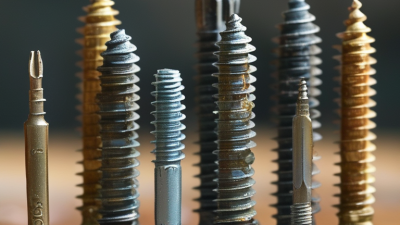
Choosing the right Screws is a technical sourcing decision, not a simple price comparison. A low-cost batch can fail through weak threads, coating damage, or inconsistent dimensions. These problems may appear only after assembly, when replacement costs become severe.
Grand View Research reported that the global fasteners market was valued at approximately USD 104.6 billion in 2023. Its report also forecasts continued growth through 2030, driven by construction, automotive, machinery, and electronics. This expanding market creates more supplier options. It also creates more room for specification errors.
Real sourcing work shows where risk hides. A screw may look correct under warehouse lighting, yet have the wrong thread pitch. A zinc-plated steel screw may perform well indoors but corrode beside saltwater. Small details matter.
Standards provide a stronger starting point. ISO 898-1 defines mechanical properties for many carbon and alloy steel fasteners. ISO 3506 covers corrosion-resistant stainless steel fasteners. The World Bank’s Logistics Performance Index 2023 also highlights customs, infrastructure, and shipment reliability as important supply-chain factors. Product quality and delivery quality must be reviewed together.
The following ten tips examine material, grade, dimensions, coatings, testing, packaging, documentation, and supplier capability. They are designed for international purchasing teams comparing samples and factory records. Ask for measurable evidence. Request inspection reports, not only attractive photographs.
Still, no checklist is perfect. A sample can pass while production changes later. That uncomfortable possibility deserves attention. Careful buyers confirm critical specifications before payment, during production, and before shipment. The best Screws are not merely inexpensive; they remain reliable in the environment where they will be used.

Choosing screws for global sourcing starts with the joint, not the catalogue. Define the application before comparing prices or materials. Describe the connected parts, material thickness, hole size, access limits, and installation method. A roof panel may need weather resistance and light clamping force. A machine bracket may require high tensile strength, vibration resistance, and repeated tightening. Record the expected load, temperature range, moisture exposure, and service life. Small details matter.
Tips: Create a one-page application brief for every screw type. State whether the load is tension, shear, or both. Identify the base material, such as steel, aluminum, timber, or composite board. Specify the preferred thread, head shape, drive type, coating, and installation torque. Ask suppliers to provide material certificates, dimensional reports, and test data linked to the exact production batch. Do not rely on a generic statement like “high strength.”
Before approving samples, test the complete assembly, not only the screw. Check thread engagement, clamp force, stripping risk, loosening, and surface damage. Use the intended tools and real production materials. A laboratory result can look excellent while the assembled joint performs poorly. That happened during one fastener review when a coating increased friction and reduced actual clamp force. The specification needed revision. Leave measurable acceptance limits for torque, corrosion exposure, hardness, and dimensional variation. It needs review.

Choosing a screw material starts with the service environment, not the lowest quotation. Carbon steel offers high strength and good value for dry interiors. Stainless steel performs better in humid, coastal, and food-processing areas, but it costs more and can still suffer from crevice corrosion. I have seen buyers specify stainless screws, then ignore salt deposits trapped under a washer. That choice needs reconsideration.
The NACE IMPACT study estimated global corrosion costs at about $2.5 trillion, or 3.4% of global GDP. That figure makes protective finishing a sourcing decision, not a cosmetic upgrade.
Zinc electroplating suits controlled indoor conditions and light moisture. Hot-dip galvanizing provides a thicker zinc layer for outdoor structures, though its rougher surface may affect tight threads. Organic coatings can add strong barrier protection, but scratches expose the steel beneath. Small damage matters.
Check the coating thickness, salt-spray test method, torque requirements, and required service life. ISO 9223 classifies atmospheric corrosivity, helping engineers match finishes with local exposure. High-strength fasteners require extra care because some electroplating processes may increase hydrogen-embrittlement risk. Ask for process controls and test records. Do not accept a generic “corrosion-resistant” statement. Material compatibility matters too: stainless screws against aluminum can create galvanic corrosion in wet conditions. The correct finish depends on the complete assembly, not the screw alone.
10 Tips for Choosing the Right Screws for Global Sourcing
Choosing the right screw for global sourcing starts with the joint, not the catalog. Define the materials, load direction, vibration, and installation method. A pan head suits a broad clamping surface, while a countersunk head creates a flush finish. Select the length carefully. Too short reduces thread engagement, while excessive length may damage hidden parts. Small changes matter. Use an engineering drawing with head diameter, shank length, tolerance, and material requirements.
Thread selection deserves equal attention. Match metric or imperial threads to the assembly and local tooling. Never assume similar-looking pitches will fit. Coarse threads work well in softer materials, while fine threads can offer better adjustment and stronger engagement in suitable metal sections. Specify pitch, thread length, and tolerance clearly. A sample fit test can reveal problems that a spreadsheet misses. It is not perfect, but it is useful.
The drive type should match available tools and the required torque. A hex or internal drive may support controlled tightening, while a cross-shaped drive can be practical for general assembly. Check recess depth and bit access before approval. Suppliers should provide inspection records, coating details, hardness data, and sample measurements. For outdoor use, evaluate corrosion exposure rather than choosing a finish by appearance alone. One common sourcing weakness is treating the screw as a low-cost detail. That approach often creates stripped heads, loose joints, and expensive rework.
Use the nominal diameter to match load and clearance requirements, and verify the thread pitch when specifying compatible nuts, tapped holes, and replacement parts across global supply chains. Values shown are standard ISO metric coarse-thread dimensions.
Dimensions are in millimetres. Drive type, material, coating, head style, and tolerance should be specified separately on the purchase drawing or product specification.
Global screw sourcing begins with more than price and appearance. A screw that fits one production line may fail another. Check the required international standard before requesting quotations. Common references include ISO, ASTM, and DIN, but the code alone is not enough. Confirm the exact edition, property class, dimensions, and test method. Ask suppliers for traceable material certificates and inspection records. Clear records support better quality decisions.
Certifications should match the application and destination market. For stainless or alloy screws, review chemical composition, tensile strength, hardness, and corrosion results. For coated fasteners, request coating thickness and salt-spray data, not vague claims. Environmental declarations may also matter in regulated markets. A certificate can look impressive while covering only one batch. Check the lot number, issuing laboratory, validity date, and accreditation status. Small details matter.
Compatibility deserves a physical check. Match thread diameter, pitch, length, head style, drive type, and washer fit. Test the screw with the actual nut or threaded hole, under realistic torque. In sourcing reviews, I have seen metric and imperial threads treated as interchangeable. It was a costly assumption. It did not fit. Recheck drawings, gauges, and samples before mass ordering. Packaging should preserve identification when several grades look identical. Some specifications remain unclear. Ask better questions before accepting a convenient answer.
10 Tips for Choosing the Right Screws for Global Sourcing
Supplier evaluation should begin with evidence, not attractive quotations. Request material certificates, dimensional reports, coating records, and lot traceability. For structural screws, verify the applicable ISO or ASTM grade and test tensile strength through an independent laboratory. A factory audit should inspect heat treatment, thread rolling, storage, and final packing. ISO 9001 certification helps, but it does not replace product testing. Ask for recent nonconformance records. They reveal more than polished presentations.
Quality control must match the application. Check diameter, pitch, head geometry, hardness, corrosion resistance, and torque performance. Use an agreed sampling plan for every shipment, with retained samples from each production lot. The World Bank’s 2023 Logistics Performance Index compares 139 economies and highlights customs, infrastructure, and shipment reliability as separate risks. Therefore, approve both the factory and its export route. A low defect rate is useless if mixed lots arrive without labels.
Price should be measured as landed cost. Include tooling, inspection, packaging, duties, inland transport, ocean freight, insurance, and possible rework. UNCTAD reports that maritime shipping carries over 80% of world merchandise trade by volume, so port delays can quickly change the calculation. Keep safety stock for critical sizes, but avoid excessive inventory. My practical weakness is trusting forecasts too much; demand can shift after one customer change. A written specification, dual-source review, and quarterly supplier scorecard create useful discipline, even when the process feels slower.
| No. | Sourcing Tip | Key Evaluation Area | Recommended Verification | Practical Benchmark or Reference | Main Risk Reduced |
|---|---|---|---|---|---|
| 1 | Define the application before requesting quotations | Load, environment, substrate, installation method, thread type, head style, diameter, length, and required quantity. | Prepare a technical drawing or specification sheet that identifies dimensions, material, finish, tolerances, packaging, and inspection requirements. | Use metric or inch dimensions consistently. State whether dimensions are nominal or subject to a defined tolerance. | Incorrect product selection, poor fit, installation failure, and quotation comparisons based on different specifications. |
| 2 | Match material and strength grade to the service load | Tensile strength, proof load, shear load, corrosion exposure, operating temperature, and galvanic compatibility. | Request material certificates and mechanical test reports for the specified batch. Confirm the marking and grade are consistent with the applicable standard. | Carbon-steel metric fasteners may be specified by property classes such as 8.8 or 10.9 under ISO 898-1. Stainless fasteners require the appropriate stainless grade and product standard. | Bolt or screw breakage, corrosion, premature loosening, and unsafe performance under load. |
| 3 | Verify supplier capability, not only quoted price | Production equipment, tooling control, heat treatment, plating, laboratory capability, capacity, and export experience. | Review process flow charts, quality certifications, calibration records, sample approval procedures, and recent audit findings. | A capable supplier should be able to provide traceable records from raw material receipt through forming, heat treatment, finishing, inspection, and packing. | Inconsistent production, uncontrolled subcontracting, missed delivery dates, and limited corrective-action capability. |
| 4 | Control dimensions and thread accuracy | Major diameter, pitch, thread form, thread length, head dimensions, drive recess, point geometry, and overall length. | Require calibrated gauges and dimensional inspection records. For metric threads, specify the required tolerance class for the external thread. | ISO metric screw threads are commonly specified using designations such as M8 × 1.25. Thread gauges should be suitable for the stated thread size and tolerance. | Cross-threading, stripped drives, loose joints, assembly stoppages, and incompatibility with mating components. |
| 5 | Specify coating and corrosion protection clearly | Zinc coating, passivation, organic coating, stainless material, coating thickness, appearance, and environmental exposure. | Define the finish, color if relevant, coating thickness method, corrosion-test requirement, and restrictions on substances such as hexavalent chromium. | Salt-spray results are comparative rather than a direct prediction of field life. The required test duration should be agreed with the application and coating system. | Red rust, white corrosion products, thread interference, environmental non-compliance, and premature replacement. |
| 6 | Build a risk-based quality-control plan | Critical dimensions, mechanical properties, surface defects, coating condition, packaging, and lot traceability. | Use a first-article approval, in-process checks, final random inspection, and a documented nonconformance process. Define acceptance criteria before production. | AQL sampling may be used for suitable characteristics, but safety-critical dimensions and material properties should not rely solely on visual sampling. | Large-scale defects, hidden material problems, disputed inspection results, and costly returns. |
| 7 | Compare total landed cost instead of unit price alone | Product price, tooling, testing, packaging, inland transport, freight, insurance, duties, taxes, and payment charges. | Request quotations using the same product specification and delivery term. Separate recurring costs from one-time tooling and inspection charges. | A low unit price can be offset by higher minimum order quantities, expensive tooling, extra sorting, damage, expedited freight, or import-related costs. | Misleading price comparisons, margin erosion, unexpected charges, and inaccurate budgeting. |
| 8 | Check minimum order quantity and production flexibility | Minimum order quantity, batch size, setup time, tooling ownership, forecast requirements, and reorder responsiveness. | Confirm whether mixed sizes or finishes can be consolidated and whether a pilot order is available before committing to annual volume. | The economically appropriate order size depends on tooling, packaging, freight mode, demand stability, and inventory carrying cost. | Excess inventory, obsolete dimensions, cash-flow pressure, and inability to respond to demand changes. |
| 9 | Plan packaging and international logistics in advance | Box strength, moisture protection, labeling, carton weight, palletization, container utilization, lead time, and shipping documents. | Approve a packaging specification showing quantity per inner pack, carton markings, net and gross weight, dimensions, lot number, and country-of-origin information. | Packaging should prevent corrosion, thread damage, mixing of sizes, and crushing during handling. Shipping documents must match the commercial invoice and packing list. | Transit damage, customs delays, incorrect receiving quantities, moisture corrosion, and higher freight cost. |
| 10 | Use a supplier scorecard and continuous review | Quality acceptance rate, on-time delivery, response time, corrective actions, cost stability, documentation, and sustainability performance. | Review supplier performance at regular intervals and maintain records of complaints, root-cause analysis, corrective actions, and improvement results. | Use weighted criteria rather than price alone. A practical scorecard can assign separate weights to quality, delivery, cost, service, compliance, and supply continuity. | Repeated defects, declining service, unnoticed cost increases, single-source dependency, and supply disruption. |
Note: Applicable standards, test methods, acceptance limits, and import requirements should be confirmed for the intended market and application before placing a purchase order.