Leave Your Message

10 Tips for Choosing the Right Fasteners?

Choosing the right Fasteners is more than matching a screw to a hole. The decision affects safety, service life, maintenance, and total project cost. A fastener that looks suitable on a workbench may loosen under vibration or corrode beside a damp loading bay. Small details matter.

This guide presents ten practical tips based on common workshop experience, engineering principles, and manufacturer guidance. It considers material compatibility, thread design, strength grades, load direction, installation torque, and environmental exposure. Stainless steel may resist moisture, but it is not automatically the best choice for every high-load application. Galvanic corrosion can also appear when dissimilar metals touch.

Check the details.

Reliable selection starts with verified information. Product datasheets, ISO or ASTM references, inspection records, and supplier traceability can support better decisions. However, specifications do not replace judgment. Real assemblies may include painted surfaces, uneven holes, temperature changes, or rushed installation. Even experienced buyers get this wrong.

A careful process includes measuring the joint, testing representative samples, and reviewing failure risks before ordering large quantities. Washers, locking features, coatings, and tightening methods deserve equal attention. The cheapest option can become expensive after repeated repairs. Still, not every premium fastener improves performance; sometimes the choice is simply oversized or poorly matched.

These tips aim to make selection clearer, safer, and more repeatable. They also encourage a useful habit: question assumptions, document choices, and inspect the finished connection. A clean appearance is not proof of reliability. Understanding the application is.
10 Tips for Choosing the Right Fasteners?

Fastener Types, Thread Profiles, and Load Ratings by Application

10 Tips for Choosing the Right Fasteners

Fastener Types, Thread Profiles, and Load Ratings by Application

Choosing a fastener begins with the joint, not the catalog. Bolts suit clamped structural joints, while screws work better in prepared holes or softer materials. Nuts, washers, studs, and rivets each manage load differently. Match the material to corrosion exposure, temperature, vibration, and installation access.

Thread profile matters more than many buyers expect. Metric threads usually use a 60-degree profile. Coarse threads assemble quickly and tolerate damaged or contaminated holes. Fine threads provide greater tensile stress area and better adjustment, but they can gall more easily.

ISO 898-1:2013 lists class 8.8 fasteners at 800 MPa nominal tensile strength and 640 MPa nominal yield strength.

Class 10.9 reaches 1,000 MPa tensile strength and 900 MPa yield strength. These figures are not safe working loads.

Calculate tensile, shear, bearing, and fatigue demands separately. ASTM F606/F606M defines tests for proof load, tension, hardness, and wedge strength. NASA’s Fastener Design Manual, NASA-RP-1228, stresses preload control because insufficient preload can increase joint separation and fatigue damage.

Use a calibrated torque method, but remember torque can vary widely with lubrication and surface condition. Torque alone is imperfect.

Select washers when hole enlargement or surface damage is possible. Check thread engagement, preferably with the mating material’s strength in mind. Verify temperature limits and galvanic compatibility. Then review the drawing with a real installation tool.

Laboratory ratings rarely survive poor alignment, dirty threads, or rushed assembly. I have seen “stronger” fasteners fail sooner because preload was never verified.
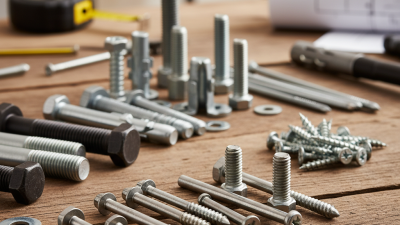
Match Tensile, Shear, and Torque Requirements Using ASTM and ISO Data

10 Tips for Choosing the Right Fasteners

Match Tensile, Shear, and Torque Requirements Using ASTM and ISO Data

Fastener selection starts with the joint, not the catalog. ISO 898-1 lists carbon and alloy steel property classes. Class 8.8 provides about 800 MPa nominal tensile strength and 640 MPa nominal yield strength. Class 10.9 offers higher capacity, but it also demands better control of tightening and fatigue conditions. For stainless fasteners, ISO 3506-1 identifies A2-70 with a minimum tensile strength of 700 MPa. These values describe material performance, not automatic joint capacity. ASTM F606/F606M provides test methods for tensile, proof-load, hardness, and wedge testing. Use certified test results when the application carries serious loads.

Shear needs separate attention. Tensile strength cannot be copied directly into a shear calculation. Check the fastener diameter, shear plane location, thread engagement, edge distance, and joint slip. Torque requires similar caution. The relationship T = KFd depends on preload, diameter, friction, coating, lubrication, and thread condition. A clean, dry thread may behave very differently from an oily one. Calibrate the torque method when preload matters. Small details decide large outcomes. A spreadsheet can look precise and still be wrong. ASTM and ISO data support the calculation, but they do not replace inspection, installation records, or a realistic load case. In practice, the weakest assumption often controls the joint.

Select Materials for Corrosion Resistance, Temperature, and Galvanic Compatibility

10 Tips for Choosing the Right Fasteners

Select fasteners for the environment, not only the purchase price. NACE International’s IMPACT study estimated global corrosion costs at $2.5 trillion annually, or about 3.4% of global GDP.

Tip 1

Identify moisture, salt, chemicals, and cleaning agents.

Tip 2

Match the material to the exposure category in ISO 9223.

Tip 3

Use stainless steel where persistent humidity demands stronger corrosion resistance.

Tip 4

Check the actual alloy, coating, and manufacturing standard.

Temperature changes the risk. Heat can reduce strength, accelerate oxidation, and damage protective coatings. Cold conditions can increase brittleness in some steels.

Tip 5

Confirm the fastener’s temperature rating with the supplier’s test data.

Tip 6

Compare tensile strength and preload at operating temperature.

Tip 7

Consider thermal expansion between the fastener and joined materials. A small mismatch can loosen the joint.

Field experience shows that “stainless” alone is not a complete specification.

Galvanic corrosion deserves careful attention. Dissimilar metals can create an electrochemical couple when moisture connects them.

Tip 8

Avoid placing a less noble metal against a more noble one without isolation.

Tip 9

Use compatible washers, sleeves, or insulating coatings when needed.

Tip 10

Inspect damaged threads and coating scratches before installation.

ASTM guidance and corrosion engineering practice support controlling moisture, area ratio, and electrical contact.

I have seen carefully selected bolts fail because the washer was overlooked. That detail is easy to miss. Recheck the full assembly, not just the fastener.

Verify Size, Grade, Strength Class, and Safety Factors Before Purchase

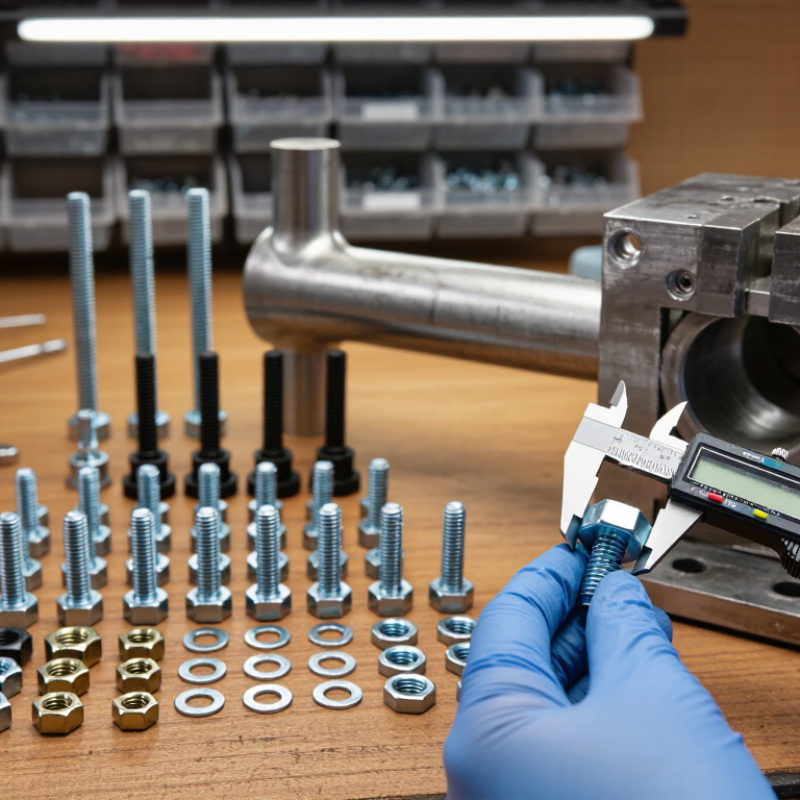
Choosing fasteners starts with facts, not appearance. Measure diameter, length, thread pitch, and head clearance with calipers and thread gauges. A bolt that looks close may bottom out before clamping the joint. Check whether the threads are coarse or fine. Record every measurement in the purchase file. I have seen rushed orders fail because “nearly identical” became the working assumption. It was an avoidable mistake.

Read the manufacturer’s markings and documentation carefully. Grade and strength class are not interchangeable terms. Confirm the required tensile strength, proof load, hardness, and applicable engineering standard. Never assume stainless or hardened steel automatically means stronger. Compare the fastener’s capacity with the actual joint load, including tension, shear, vibration, and repeated cycling. The required safety factor should come from a qualified design calculation, not a convenient guess. More margin is not always better if it changes joint behavior.

Consider the working environment before placing an order. Moisture, heat, chemicals, and galvanic contact can affect performance. Select compatible materials, coatings, washers, and nuts as one assembly. Verify certificates, dimensions, lot traceability, and storage conditions. Then check the installation torque using a calibrated wrench and the correct procedure. I once focused heavily on strength and overlooked tool access. The fastener met the specification, but installation became awkward and inconsistent. That detail deserved attention earlier.

Compare Standards, Installation Methods, and Lifecycle Costs for Final Selection

Choosing fasteners is a lifecycle decision, not a catalog exercise. Compare material, thread geometry, coatings, standards, and service conditions. ISO 898-1 classifies mechanical properties for carbon and alloy steel fasteners. ASTM and ISO requirements are not always interchangeable. Check dimensions, strength class, corrosion exposure, temperature, and traceability against the drawing.

Tip 1: Build a comparison table before requesting prices. It exposes risky substitutions. Installation also changes performance. NASA’s Fastener Design Manual notes that roughly 90% of applied torque can be consumed by friction. Use calibrated tools, controlled tightening, and the specified lubricant. For critical joints, compare torque, turn-of-nut, tension-control, or direct-tension methods. Tip 2: Test the complete assembly, not only the fastener. A clean workshop result may fail on a painted flange. That possibility deserves attention.

Lifecycle cost includes inspection, retightening, downtime, replacement, and corrosion control. The NACE IMPACT study estimated global corrosion costs at about 2.5 trillion dollars, or 3.4% of global GDP. The estimate is broad, but it makes coating decisions difficult to ignore. Apply ISO 15686-5 lifecycle costing, and state discount rates clearly. Tip 3: Price two scenarios: purchase-only and ten-year ownership. The second may favor a higher initial cost. Still, assumptions need review. Salt, vibration, access, and installer skill can overturn the spreadsheet.

10 Tips for Choosing the Right Fasteners

Compare standards, installation methods, material performance, and lifecycle requirements before making the final selection.

How to read the chart

The values show minimum mechanical properties specified by ISO 898-1 for carbon and alloy steel fasteners and ISO 3506-1 for corrosion-resistant stainless steel fasteners. Higher strength does not automatically mean a better choice: corrosion exposure, joint preload, installation control, service temperature, inspection access, and total lifecycle cost must also be evaluated.

1. Define the joint load
Separate tensile, shear, fatigue, and preload requirements.
2. Check the governing standard
Confirm dimensions, strength class, marking, and certification.
3. Match the material to exposure
Consider humidity, chlorides, chemicals, and temperature.
4. Prevent galvanic corrosion
Review contact between dissimilar metals and coatings.
5. Select the installation method
Use torque, angle, tensioning, or direct-tension methods as appropriate.
6. Control friction conditions
Lubrication and coatings can significantly change achieved preload.
7. Allow tool access
Verify clearance for tightening, inspection, and future removal.
8. Plan inspection
Define torque checks, tension verification, and traceability needs.
9. Consider maintenance
Evaluate corrosion protection, replacement frequency, and removability.
10. Compare lifecycle cost
Include installation, inspection, downtime, replacement, and disposal costs.