Leave Your Message

Who Are the Top China Fastener Suppliers?

China Fasteners support products used in construction, machinery, vehicles, furniture, and many other industries. Yet choosing a supplier involves more than comparing prices or browsing a polished catalog. Buyers need to understand what each company makes, how it manages quality, and whether its production capacity fits the order. Small details matter. A sample bolt’s thread finish, coating, and dimensional consistency can reveal more than a sales brochure.

This guide looks at leading China-based fastener suppliers and the practical factors buyers can use to assess them. It considers product range, manufacturing capabilities, quality-control practices, customization options, communication, and export experience. Supplier strengths can differ, and a company that suits a high-volume standard order may not suit a small, specialized run. The best choice depends on the application, required specifications, and expected delivery schedule.

Rankings should be treated as a starting point, not a guarantee. Company information and capabilities can change, while public descriptions may not show how a factory performs on a specific order. Ask for current specifications, relevant test records, samples, and clear written terms. Verify details that matter to your project. That takes time. It can also prevent costly surprises. The following overview aims to make supplier research more focused, while leaving room for buyers to confirm claims directly and judge fit for themselves.

Who Are the Top China Fastener Suppliers?

China’s Fastener Industry: Product Types, Materials, and Market Segments

Who Are the Top China Fastener Suppliers?
China’s Fastener Industry: Product Types, Materials, and Market Segments

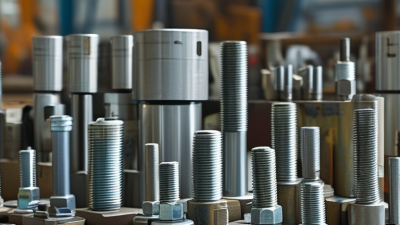
China produces a broad range of fasteners, including bolts, screws, nuts, washers, rivets, and threaded rods. Standard parts suit common assembly needs, while custom fasteners can match specific dimensions or performance requirements. Small details matter: thread pitch, head shape, and fit can affect installation and reliability.

Materials vary by application. Carbon steel is widely used for general-purpose fastening, while stainless steel is often chosen where moisture resistance matters. Aluminum offers lower weight, and alloy steels can meet higher strength demands. Coatings may improve corrosion resistance, but they must suit the working environment. A coating alone is not a guarantee. Buyers serve construction, automotive, machinery, electronics, and furniture markets, each with different requirements for strength, finish, and consistency. Specifications can be overlooked, even by experienced teams.

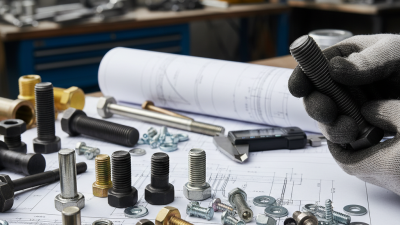
Tips: Share drawings, material grades, coating needs, and inspection criteria before requesting samples. Test parts in the actual assembly. A neat sample is useful, but production consistency deserves equal attention.

How to Define “Top” Suppliers: Capacity, Export Reach, and Quality Certifications

A “top” fastener supplier is not simply the factory with the largest catalogue. Buyers should assess verified production capacity, export experience, and quality controls together. The World Steel Association reported that China produced 1,019.1 million tonnes of crude steel in 2023. This shows the scale of the upstream materials base, but it does not prove any individual factory can meet a tight delivery schedule. Ask for monthly output by fastener type, machine capacity, and recent lead-time records. Then compare those figures with sample orders and production audits.

Export reach needs evidence beyond a list of destination countries. UN Comtrade tracks international trade under HS code 7318, covering screws, bolts, nuts, and similar iron or steel articles. Buyers can use these records to check trade flows, while requesting shipment histories and destination-specific packaging details from suppliers. Quality credentials need equally careful review. The ISO Survey 2022 recorded about 1.06 million ISO 9001 certificates in China; certification alone, however, does not guarantee consistent dimensions or coating performance. Check certificate scope, validity, inspection reports, and traceability from incoming wire to packed cartons.

That is useful, but incomplete.

Ask how the supplier handles rejected batches, too. A polished certificate file cannot replace a close look at real inspection data.

Leading Chinese Suppliers by Fastener Type and Manufacturing Specialization

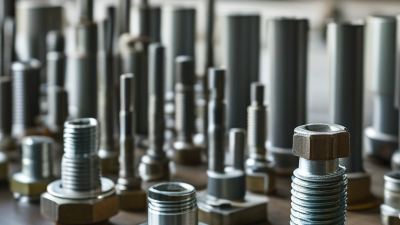
China’s fastener suppliers are best compared by process, not by catalog size. Cold-heading factories are suited to high-volume bolts, nuts, and screws, where die control and consistent thread rolling matter. Precision-machining specialists handle tighter tolerances and custom geometries. Stamping and wire-forming operations may fit clips, pins, and formed parts. These categories overlap. That matters.

World Steel Association’s World Steel in Figures 2024 reports China produced 1,019.1 million tonnes of crude steel in 2023. This indicates a vast upstream materials base, but it does not prove any individual fastener supplier’s quality. UN Comtrade classifies many iron or steel fasteners under HS 7318, including screws, bolts, nuts, and washers.

Buyers can use these trade categories to understand product mix, then verify factory capabilities directly. Ask for process flow, material certificates, heat-treatment records, and coating thickness checks. A product sheet is not enough.

I would also inspect sample threads and packaging; sourcing checklists can overlook simple handling damage.

Comparing Supplier Quality Against ISO 898-1 Classes 8.8 and 10.9

Who Are the Top China Fastener Suppliers?

For buyers comparing suppliers, ISO 898-1 offers a useful starting point—not a complete quality verdict. For common coarse-thread bolts, property class 8.8 specifies a minimum tensile strength of 800 MPa. Class 10.9 raises that minimum to 1,040 MPa. The standard also sets requirements for proof load, hardness, and other mechanical properties. That matters.

China’s manufacturing scale is substantial: the World Steel Association reported crude steel production of 1,019.1 million tonnes in 2023. But steel output does not prove fastener quality. A supplier must show that finished bolts—not merely incoming steel—meet the specified class. Ask for lot-specific test reports, material traceability, and evidence of calibrated tensile-testing equipment. Check that sample results match the ordered diameter and heat-treatment condition.

A certificate can look convincing and still leave gaps. Verify the marking on the fastener, compare it with the inspection documents, and request independent testing for critical applications. Class 10.9 is not automatically the better choice; the joint design and service conditions matter. I would also scrutinize coating and hydrogen-embrittlement controls, since strength figures alone cannot reveal every failure risk. ISO compliance is a baseline, not a guarantee of consistent production.

How to Verify Suppliers: GB/T Compliance, Testing Data, and Traceability

A supplier’s claim of GB/T compliance is only a starting point. Ask which specific standard and revision applies to each fastener, then compare it with the drawing, material grade, dimensions, and surface treatment. A vague statement such as “meets GB/T” does not tell you whether the offered product matches your specification.

Request test data tied to the actual production lot. Depending on the fastener and its intended use, records may cover tensile strength, hardness, dimensions, or coating thickness. Check sample identification, test dates, methods, and acceptance limits. Paperwork can look tidy. That is not proof. If a report lists results but cannot identify the tested batch, ask for clarification or a fresh, traceable report.

Traceability should connect raw material records, heat or lot numbers, inspection results, and packaging labels. During a factory review, pick one carton and follow its number back through those records. Discrepancies matter. A sample may pass while later batches vary, so compare delivered goods with approved samples and stated inspection criteria. I would not treat one clean inspection as a guarantee; it is only a snapshot. A supplier’s response to a documented mismatch can be as revealing as the original test report.

Who Are the Top China Fastener Suppliers? — How to Verify Suppliers: GB/T Compliance, Testing Data, and Traceability

Verification Area Applicable Standard or Basis Evidence to Request How to Verify
Product specification Purchase order, approved drawing, and the specified product standard. Examples include GB/T 5782-2016 for hexagon head bolts and GB/T 6170-2015 for type 1 hexagon nuts. Controlled drawing or specification showing product type, dimensions, tolerance class, material, property class, finish, and applicable standard edition. Compare the quotation, order confirmation, drawing, sample, and inspection report. Confirm that all documents refer to the same revision and product configuration.
Mechanical properties Use the applicable product standard and property-class requirements. GB/T 3098.1 covers mechanical properties of bolts, screws, and studs made of carbon steel and alloy steel; GB/T 3098.2 covers nuts. Lot-specific test report identifying the tested product and lot, test methods, measured results, equipment, test date, and acceptance criteria. Check that the reported tests and limits match the specified fastener type, material, dimensions, and property class. Do not apply one property-class limit to every product.
Dimensions and workmanship The product standard and approved drawing define the dimensions, tolerances, thread requirements, and permitted workmanship for the ordered item. Dimensional inspection record, including the inspection characteristics, measuring equipment, sample identification, actual readings, and disposition of nonconforming parts. Check critical dimensions and thread gauges against the specified requirements. Verify that measuring equipment is suitable and within its calibration period.
Acceptance inspection GB/T 90.1-2023 addresses acceptance inspection for fasteners. The applicable sampling and acceptance requirements depend on the standard, order, and agreed inspection plan. Documented inspection plan and lot acceptance record, including lot definition, sampling method, inspection results, and release decision. Confirm that the inspected lot matches the shipment and that the sampling plan and acceptance criteria were agreed before production or inspection.
Coating and corrosion protection Use the coating standard named in the order. GB/T 5267.1 covers electrodeposited coatings on fasteners; other coating processes require their corresponding applicable requirements. Coating specification, process or batch identification, coating-thickness results where specified, appearance inspection, and any agreed corrosion-test report. Verify coating type and thickness requirements against the order. Check that corrosion-test conditions and acceptance criteria are stated; a salt-spray result alone does not establish service life.
Material and heat-treatment traceability Traceability requirements are set by the order, product specification, and applicable quality requirements. Material certificate or mill test certificate, heat or melt number, heat-treatment batch record where applicable, and linkage to the finished-product lot. Follow identifiers from raw material through processing and final inspection. Confirm that certificate grades and heat numbers correspond to the actual production lot.
Testing data integrity Test methods and acceptance limits must match the governing product standard, material requirements, and purchase specification. Original or controlled test reports with sample and lot IDs, measured values (not only “pass”), test date, method, and laboratory or equipment identification. Check for consistent units, complete sample identification, and results within the specified limits. Clarify whether testing was performed in-house or by an independent laboratory.
Nonconformance control The agreed quality system and purchase requirements define how rejected or reworked product is controlled. Nonconformance reports, corrective-action records when relevant, reinspection results, and evidence that rejected material was segregated. Ask how affected lots are identified and prevented from accidental shipment. Verify that any rework or concession was approved and documented.
Packaging and shipment identification Packaging, marking, and shipment documentation should follow the purchase order and applicable product or packaging requirements. Package labels and packing list showing product description, size, property class, finish, quantity, lot or batch number, and order reference as agreed. Match package labels and shipment documents to the inspection records and certificates. Check that lot identity remains visible and intact during storage and transport.

Important: This is a supplier-verification checklist, not a ranking or a claim about any particular supplier. Confirm the current edition and applicability of each GB/T standard through an official standards source, and agree the inspection plan and acceptance criteria before placing an order.